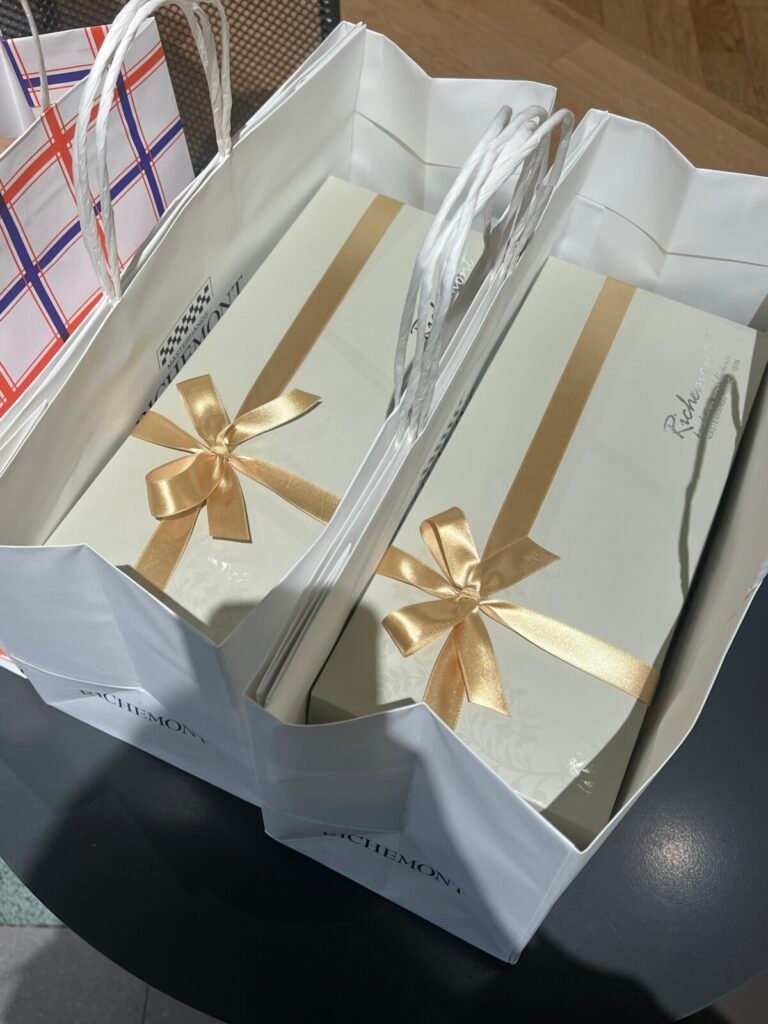
Before I started planning my own wedding, I had never really thought about Korean wedding culture or how uniquely Korean the process could be.
I had attended plenty of weddings in Korea. You arrive, congratulate the couple, watch the ceremony, eat, and go home.
Simple enough.
Then it was my turn to get married.
And I quickly realized that choosing a wedding venue in Korea isn’t simply about finding a beautiful place and picking a date.
How many guests will come? Where do our parents live? How many guests will they invite? Will relatives be traveling from outside Seoul? How will the meal be served? What is included in the venue package?
Suddenly, choosing a wedding hall felt less like booking a venue and more like managing a small project.
And perhaps that’s because a Korean wedding isn’t only about two people getting married.
It is still, in many ways, an event involving two families.
Korean Wedding Culture: Choosing a Wedding Venue
One of the first major decisions we made after telling our families about our marriage was choosing the wedding venue.
We compared several venues around Seoul, but we had three main requirements.
We wanted a venue that could accommodate around 200 guests, a location that would be reasonably accessible for relatives traveling to Seoul, and a style of ceremony where guests could dine while watching the wedding.
That first requirement — 200 guests — leads to something interesting about Korean weddings.
The “Guaranteed Guest Count”
Many Korean wedding venues operate with what is called a 보증인원 (bojeung inwon), or guaranteed number of guests.
When booking a venue, the couple estimates how many people will attend and agrees to a minimum number of meals.
If you guarantee 200 guests but significantly fewer people show up, you may still have to pay based on the agreed minimum.
So before asking,
“Which wedding hall do we like?”
many Korean couples first have to ask:
“How many people are actually coming to our wedding?”
And answering that question isn’t always easy.
Why Korean Weddings Can Have So Many Guests
A Korean wedding guest list often extends well beyond the bride and groom’s closest friends.
Parents traditionally invite their own relatives, friends, colleagues, and acquaintances as well.
This means that a wedding can function not only as a celebration for the couple, but also as an important social occasion for both families.
That became relevant to us immediately.
My parents live outside Seoul, so choosing a venue wasn’t simply about what was convenient for my fiancée and me.
We also had to think about parents, relatives, and other guests traveling into the city.
It was one of those moments when I realized something I had always taken for granted:
In Korea, marriage may begin with two people, but wedding planning often begins with two families.
Visiting Eliena Hotel in Seoul
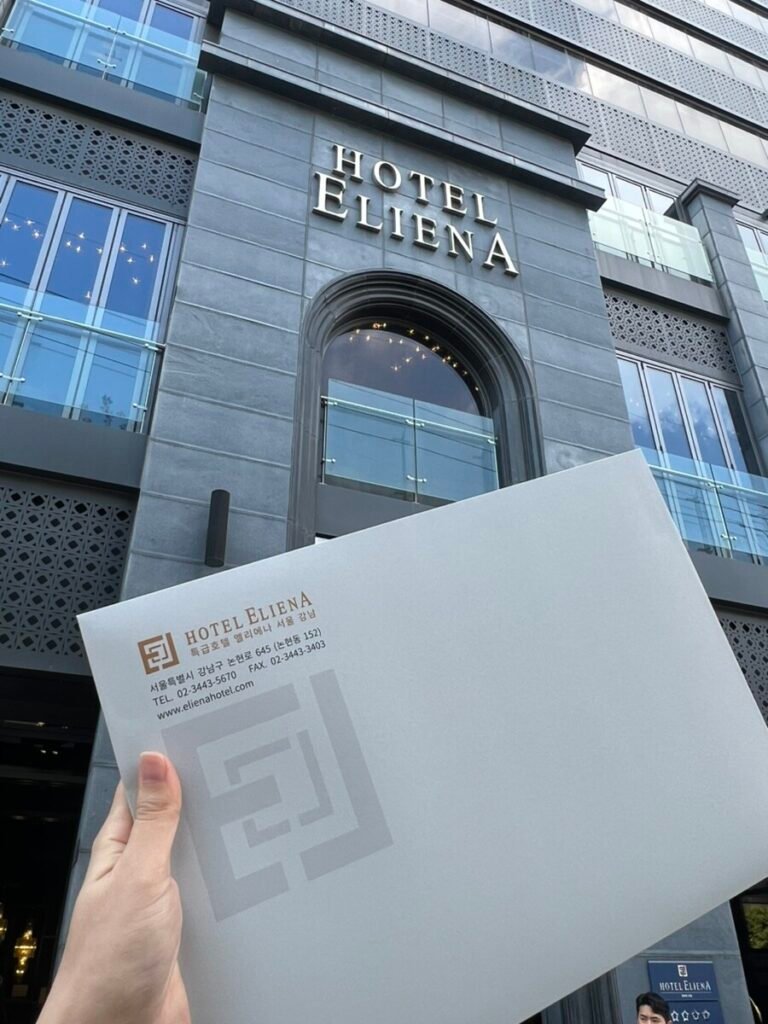
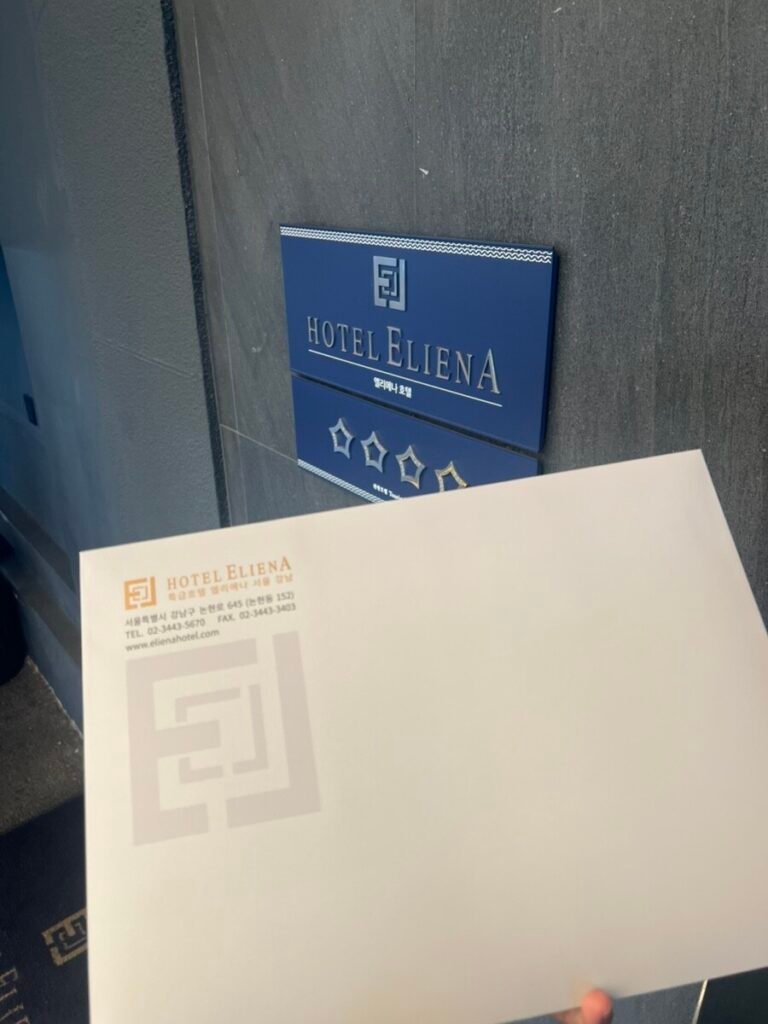
After comparing different options, one of the venues we visited was Eliena Hotel in Gangnam, Seoul.
We happened to visit while an actual wedding was taking place, which turned out to be much more useful than seeing an empty hall.
We could see how guests moved through the space, how the lighting looked during a ceremony, and what the venue actually felt like when it was full of people.
The Convention Hall immediately stood out to us.
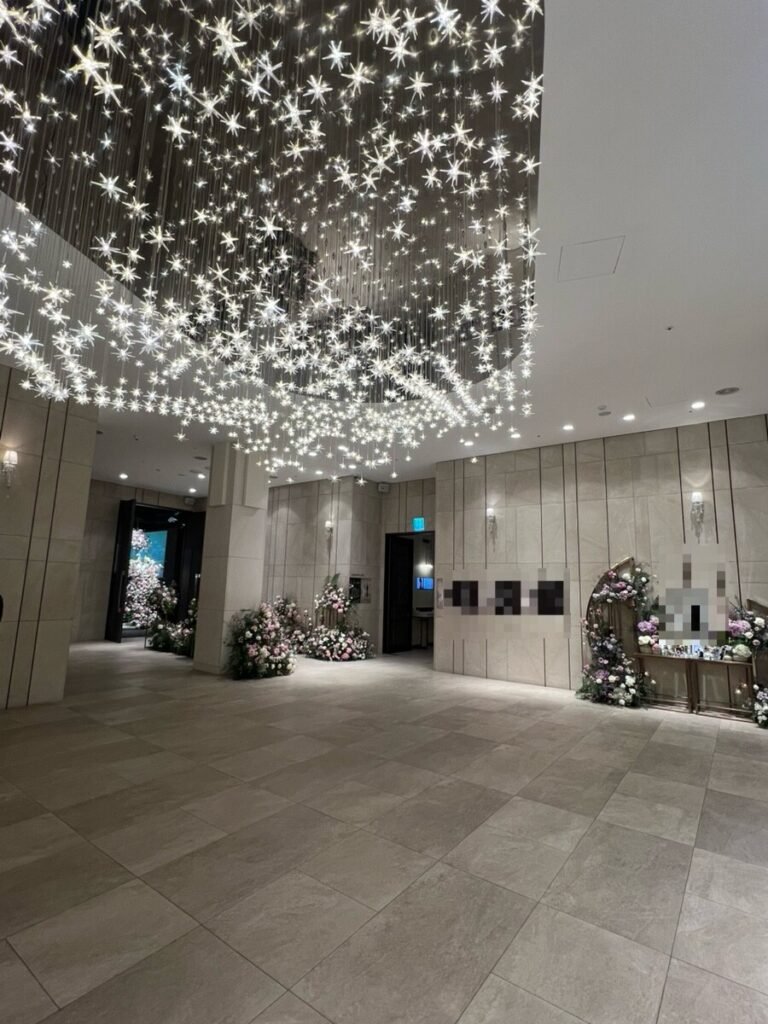
The lobby had dramatic lighting and generous floral decorations, while the ceremony space felt formal without being excessively stiff.
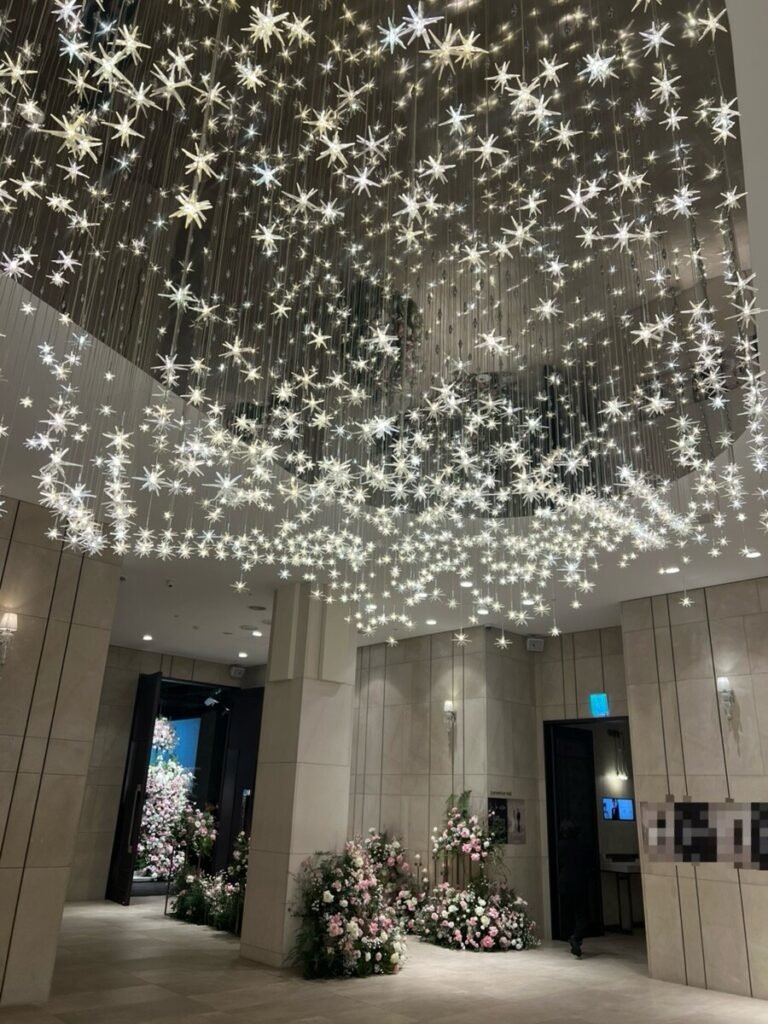
But there was another detail that taught me something about the Korean wedding industry:
flowers can be a serious part of the wedding budget.
Flowers, Packages, and the Korean Wedding Industry
When comparing wedding venues in Korea, the venue rental fee doesn’t always tell you how much the wedding will actually cost.
Flowers, decorations, meals, photography, makeup, and various other services can all affect the final price.
At our venue, floral decorations could be shared between couples using the same hall on the same day.
Since wedding flowers are used for only a short period of time, this arrangement made sense to us financially while still allowing the venue to feel fully decorated.
It also made me realize just how large the wedding industry in Korea actually is.
Booking the hall is only the beginning.
There is wedding photography.
There are dresses and makeup.
There is photography on the wedding day.
There may be a professional MC.
The groom needs a suit.
Even the parents of the bride and groom may have professionally arranged outfits, hair, and makeup for the ceremony.
Some of these services are offered or coordinated through the wedding venue itself.
For someone experiencing a Korean wedding as a visitor, much of this probably happens invisibly.
When you’re actually planning one, you suddenly discover the enormous industry operating behind those few hours.
What Is a Simultaneous Wedding Ceremony in Korea?
Another feature we specifically wanted was a 동시예식 (dongsiyesik).
This basically means that the ceremony and meal take place in the same space, allowing guests to dine while the wedding proceeds.
Not every Korean wedding works this way.
At many wedding halls, guests watch the ceremony and then move to a separate dining area or buffet.
We preferred the simultaneous format because we wanted the wedding to feel a little more relaxed and give our guests more time to enjoy the occasion.
This is also why saying that a “typical Korean wedding” works in one particular way can be misleading.
Hotel weddings, dedicated wedding halls, church weddings, and smaller ceremonies can all feel quite different.
But there is one characteristic you’ll notice at many Korean weddings:
efficiency.
Venues may host multiple weddings on the same day, sometimes only a few hours apart.
Coming from Korea, I never thought much about it.
Planning my own wedding made me realize how unusual that system might seem to someone experiencing it for the first time.
Why We Eventually Chose This Venue
In the end, we decided to hold our wedding at Eliena Hotel.
The appearance of the hall certainly mattered.
So did the food, location, guest capacity, and overall cost.
But one thing that became more important than I expected was how the venue operated.
A wedding venue isn’t somewhere only the bride and groom will experience.
Our parents will be there.
Our relatives will be there.
Friends and colleagues will be there.
Some people will travel several hours just to attend.
So the way guests are welcomed and guided became part of our decision as well.
After visiting the venue and seeing an actual wedding taking place, we felt comfortable trusting them with ours.
What Planning My Own Wedding Taught Me About Korean Culture
I grew up in Korea and had been to Korean weddings many times.
Nothing about them seemed particularly “Korean” to me.
They were simply weddings.
But preparing for my own changed my perspective.
The guaranteed guest count.
Parents having their own guest lists.
Relatives traveling across the country.
The importance of the meal.
The wedding packages.
The flowers.
The parents’ formal clothing and makeup.
The surprisingly precise schedule behind the entire day.
What surprised me most about Korean wedding culture was how many of these details I had taken for granted.
These aren’t just logistical details.
Together, they reveal something about how weddings function in modern Korean society.
There are traditional ideas about family mixed with an extremely modern, highly organized wedding industry.
There are personal choices, but there are also expectations involving parents, relatives, and guests.
And that’s exactly why I wanted to write about it.
When people think about experiencing Korean culture, they usually imagine palaces, temples, traditional markets, K-pop, or Korean food.
Those are certainly part of Korea.
But culture also exists in ordinary life.
How people get married. How families meet. What guests bring to a wedding. What parents wear. Even how much money you put into an envelope.
Those everyday customs can sometimes tell you more about a country than a tourist attraction can.
So this will be the beginning of a new series on MASIL:
The Korean Wedding Series.
I’ll be writing about the Korean wedding traditions and customs I’ve encountered while preparing for my own wedding — including family meetings, wedding gifts, money envelopes, and what actually happens on the wedding day.
Because apparently, getting married in Korea comes with enough material for an entire series.