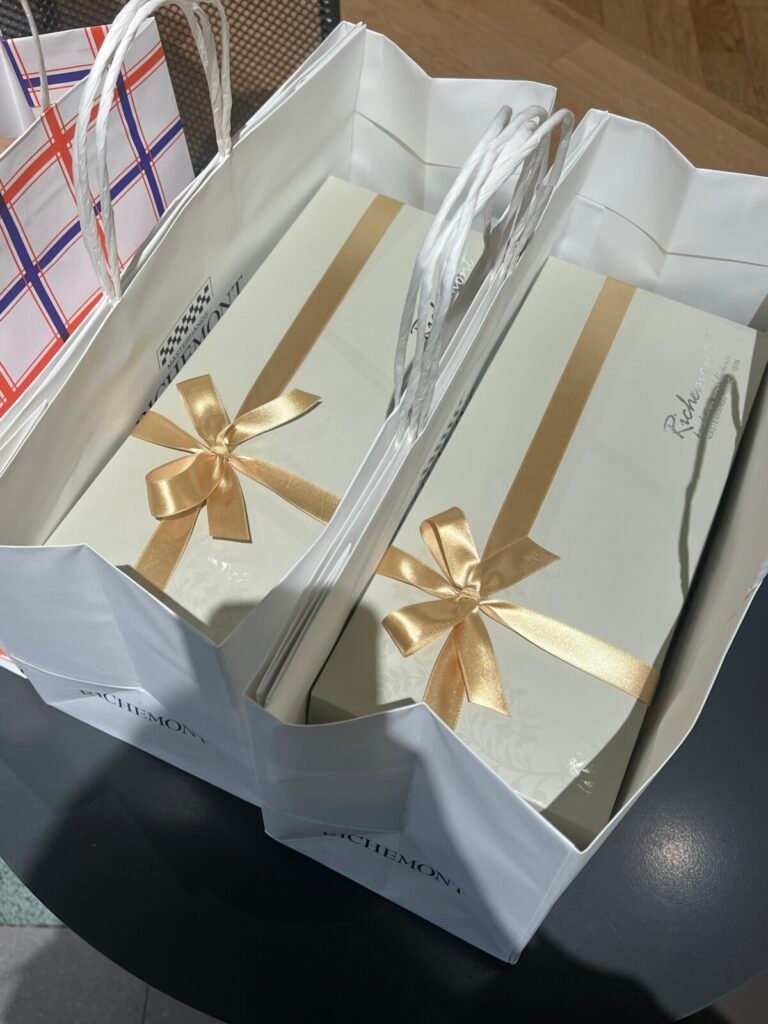
Before planning my own wedding, I had never really thought about how many steps in a Korean family meeting before marriage reflect the importance of family in Korean wedding culture.
One of the most interesting is called 상견례 (san-gyeon-rye).
In simple terms, 상견례 is a formal meeting where the families of a couple meet before the wedding. You could describe it in English as a formal meeting between the two families before marriage.
But after experiencing my own 상견례, I realized that calling it a family dinner doesn’t quite capture what it means.
It marks an important transition.
The marriage may be a decision between two people, but 상견례 is the moment when two families formally begin a relationship as well.
And recently, my wife and I experienced that moment ourselves.
What Is 상견례 (san-gyeon-rye)?
The Korean word 상견례 comes from the Chinese characters 相見禮, referring to the act of formally meeting and greeting one another.
Today, it generally refers to the occasion when the parents and families of an engaged couple officially meet before marriage.
Korean wedding culture has changed considerably over the years.
Many couples today decide to marry first and inform their parents afterward. Sometimes the parents may even have met casually before the official 상견례.
Still, having a formal Korean family meeting before marriage remains common.
And choosing where to have it can become a surprisingly serious part of wedding planning.
Couples often look for a Korean restaurant, Japanese restaurant, or hotel with a private dining room.
But you aren’t simply searching for good food.
Suddenly, you’re asking questions you would almost never consider on a normal dinner date:
Is there a private room?
Is it easy for both sets of parents to reach?
Is the restaurant quiet enough to have a conversation?
Will the food appeal to everyone?
How should everyone be seated?
Will the service interrupt the conversation too often?
Once I started planning one myself, I finally understood why there are so many Korean articles recommending the “best places for 상견례.”
Why Do Koreans Have 상견례?
To understand 상견례, it helps to understand the role families can still play in Korean weddings.
Marriage in modern Korea is, of course, a decision made by the couple.
But once wedding planning begins, parents and extended families often become much more visible.
Parents may have their own wedding guest lists.
They play formal roles during the wedding ceremony.
Special outfits, hair, and makeup may be arranged for the parents of the bride and groom.
And even when choosing a wedding venue, couples often consider not only themselves but also where their parents, relatives, and other guests will be traveling from.
I experienced this myself when we chose our wedding venue in Seoul.
In that sense, 상견례 represents something bigger than dinner.
This reflects a long-standing aspect of Korean wedding culture, where marriage has traditionally been seen as a connection between two families, not only between the couple.
It is the point where:
“We are getting married.”
starts to become:
“Our families are becoming connected too.”
That may sound extremely formal, but modern 상견례 doesn’t necessarily feel that way.
Ours certainly began with a little nervousness, but ultimately it was about eating together, talking, and getting comfortable with one another.
Our 상견례 at a Hotel in Seoul
We decided to have our 상견례 at Eliena Hotel in Seoul, the same hotel where we were planning to hold our wedding.
That made our experience a little unusual.
As part of our wedding package, we had an opportunity to taste the meal that would later be served to our guests on the wedding day.
Instead of doing the tasting separately, we decided to combine it with our 상견례.
It turned out to be a good decision.
Rather than simply bringing our parents together for dinner, we could also show them where we were actually going to get married.
The Moment Our Two Families Finally Met
On the day of our 상견례, our families first met in the hotel lobby.
My wife and I had already met each other’s parents several times.
But this was different.
It was the first time both sets of parents were together in the same place.
There was naturally a little tension at first.
Even a simple greeting somehow feels more important when you know that this person will soon become part of your extended family.
Fortunately, things quickly became more relaxed.
Before dinner, a hotel staff member showed our parents around the wedding venue.
They saw the ceremony hall, bridal waiting room, and floral decorations that would eventually be part of our wedding.
One moment still stands out to me.
Both of our mothers seemed genuinely excited when they saw the elaborate flower arrangements.
Watching our parents enjoy a wedding venue that we had chosen ourselves was surprisingly reassuring.
It felt like our wedding plans were becoming real.
Then We Sat Down for Dinner
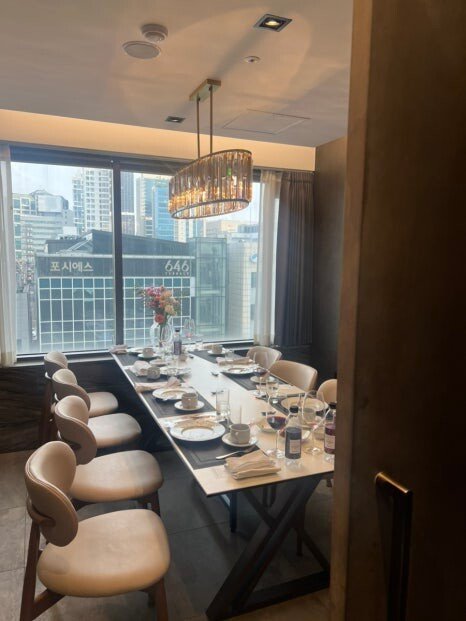
After touring the venue, we moved to a Japanese restaurant on the seventh floor of the hotel.
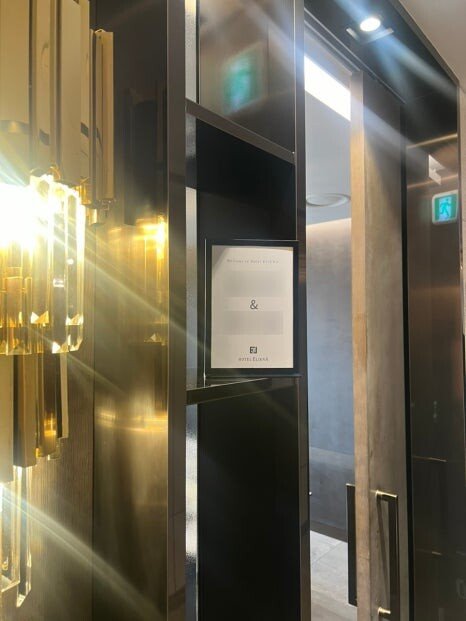
A separate private room had been prepared with our names outside.
This is one practical aspect of 상견례 that I now understand much better.
A private room matters.
Two families who may barely know each other need time to talk. A crowded restaurant with people constantly walking past the table would make the experience much less comfortable.
The meal we were served was the same course planned for our wedding guests.
It began with Korean rice cakes, followed by salmon salad, pine mushroom cream soup, steak, three pieces of sushi, Korean banquet noodles (janchi-guksu), dessert, and coffee.
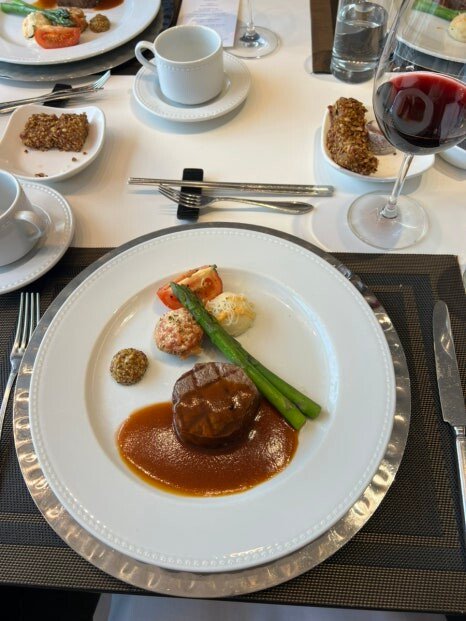

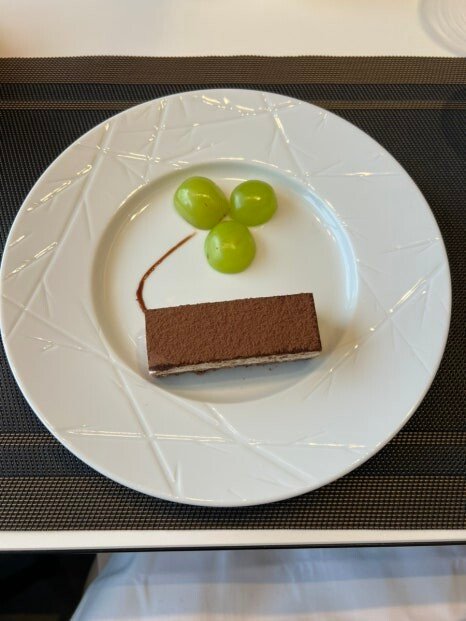
I won’t turn this into a restaurant review, because the food itself wasn’t really the most interesting part of the experience.
What mattered was that this was the food our wedding guests would eventually eat.
And food matters quite a lot at Korean weddings.
After attending a wedding, it’s not unusual to hear people comment on whether the food was good.
So having both sets of parents taste the menu with us was actually useful.
The sushi and mushroom soup were particularly popular at our table.
By the time we reached the janchi-guksu, I was already quite full.
We had initially worried that the portions might be too small, so hearing both families say that there was plenty of food was reassuring.
A Small Surprise for Our Parents
Toward the end of dinner, my wife and I had prepared something small.
Instead of writing letters to our own parents, we wrote to each other’s parents.

I prepared a letter for my future parents-in-law, while my wife wrote one for my parents.
We also prepared a small lettering cake.
It wasn’t an elaborate event.
But looking back, I think it fit the meaning of 상견례 perfectly.
We are used to thanking our own parents.
There aren’t many occasions, however, when you sit down and directly express your feelings to the parents of the person you are about to marry.
For me, this was perhaps the moment when marriage began to feel like something extending beyond just the two of us.
Is 상견례 Still Necessary in Modern Korea?
After our dinner, I found myself wondering about this.
Do Korean couples still need a formal family meeting before marriage?
Korean wedding culture has changed dramatically.
Parents generally have less influence over their children’s marriages than they once did, and many younger couples prefer to simplify traditional wedding customs.
상견례 isn’t a legal requirement, of course.
And there isn’t one fixed rule for how it must be done.
Some families keep it very formal.
Others simply have a relaxed meal together.
But after experiencing it myself, I understand why the custom has survived.
These are two families who may meet again at holidays, family events, and important moments throughout the couple’s lives.
상견례 gives them a chance to sit down for the first time without the chaos of the actual wedding day.
Our dinner began with everyone being slightly careful and formal.
By the end, we were eating, talking, and laughing much more naturally.
And that was probably the whole point.
A Korean Wedding Is More Than the Wedding Day
If you attend a wedding in Korea as a foreign visitor, you may be surprised by how quickly everything happens.
But behind that relatively short ceremony is a much longer process.
Families meet.
A wedding venue is chosen.
Guest lists are negotiated.
Wedding clothes are prepared.
Parents prepare for their roles.
And eventually hundreds of guests may arrive carrying envelopes of money.
These individual customs reveal an interesting mixture of modern Korean life and older family-centered traditions.
That’s what I want to explore through this Korean Wedding Series.
Not just what happens during the ceremony, but all the small customs surrounding it that Koreans often don’t even think to explain.
상견례 is one of them.
So if a Korean friend ever tells you:
“I have my 상견례 this weekend.”
you now know that they aren’t simply going out for dinner with their parents.
They are attending the first formal meeting between two families that are about to become connected through marriage.
That is 상견례 (san-gyeon-rye).