
I recently watched The Odyssey, and I walked out of the theater with a strange realization.
I already knew many of the stories.
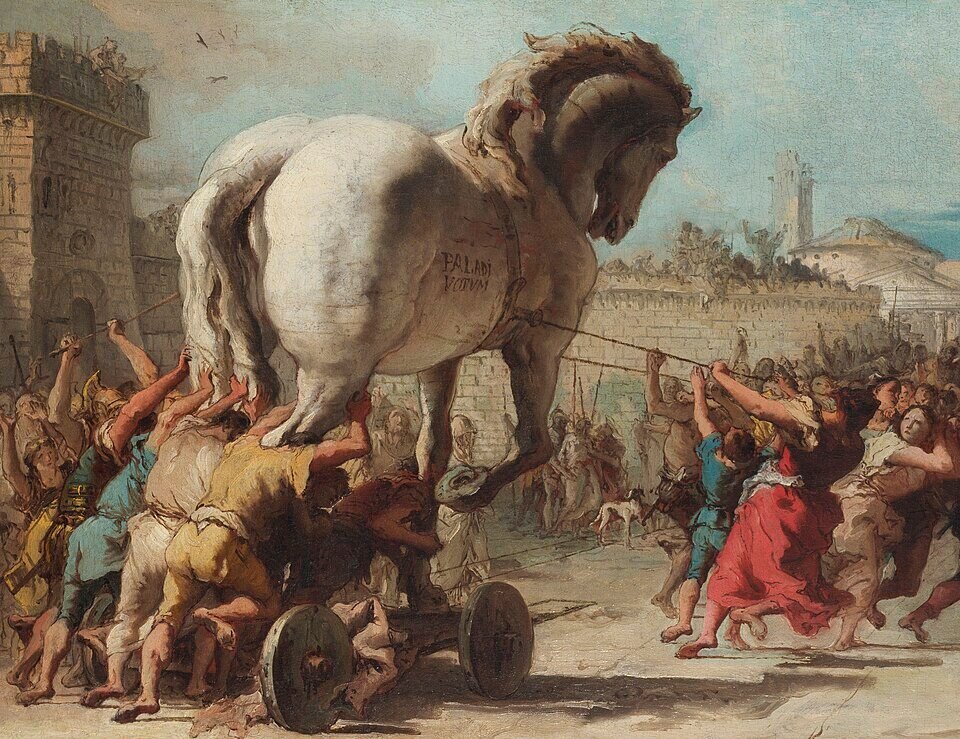
The Trojan Horse.
The Cyclops.
Circe.
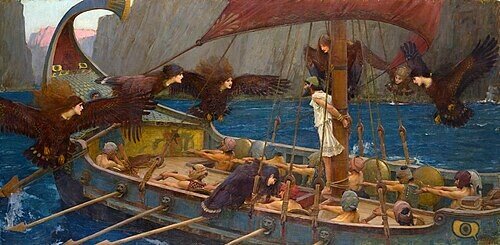
The Sirens.
Scylla and Charybdis.
I had heard all of them at some point, whether through books, movies, or stories about Greek mythology.
What I hadn’t fully realized was that they were all connected by one enormous journey.
And at the center of that journey was a surprisingly simple goal:
getting home.
Odysseus spends ten years fighting in the Trojan War.
When the war finally ends, he sets sail for Ithaca, the small Greek island where his wife Penelope and son Telemachus are waiting.
You might expect that to be the easy part.
Instead, it takes him another ten years to get there.
So after watching the film, I wanted to understand the story behind it a little better.
Who exactly was Odysseus?
Why was he fighting at Troy in the first place?
Why did Poseidon hate him so much?
And how did a journey home turn into one of the most famous adventures ever written?
Spoiler note: This article discusses major events from The Odyssey, including key parts of Odysseus’ journey and its ending. If you would rather experience the story for the first time through the film or the original epic, you may want to come back afterward.
First, What Exactly Is The Odyssey?
The Odyssey is one of the foundational works of Western literature.
Traditionally attributed to the ancient Greek poet Homer, the epic is generally dated to around the 8th century BCE.
But there’s another epic that comes before it:
The Iliad.
The easiest way to think about the two is:
The Iliad = the war.
The Odyssey = the journey home.
The Iliad takes place during the Trojan War and revolves around Achilles, war, anger, honor, and death.
The Odyssey starts from a very different idea.
The war is over.
Now one of its heroes needs to get home.
And somehow, that proves almost as difficult as the war itself.
So, Who Was Odysseus?
Odysseus was the legendary king of Ithaca, an island in western Greece.
But he wasn’t quite the same kind of Greek hero as Achilles or Heracles.
His greatest weapon wasn’t strength.
It was his mind.
Odysseus survives through strategy, persuasion, deception, improvisation—and occasionally some very questionable decisions.
That’s important because his intelligence is both his greatest strength and, strangely enough, one of the reasons he suffers so much.
The most famous example of that intelligence?
The Trojan Horse.
After ten years of war, the Greeks still couldn’t break through Troy’s defenses.
So instead of attacking the city directly, they constructed a giant wooden horse, hid warriors inside it, and pretended to sail away.
The Trojans brought the horse into their city.
That night, the Greek soldiers emerged, opened the gates, and Troy fell.
Whether a literal wooden horse ever existed is another question entirely. But within the legendary tradition of the Trojan War, it became the ultimate symbol of winning through deception rather than brute force.
And Odysseus became the hero most closely associated with the plan.
The Strange Part: Odysseus Didn’t Even Want to Go to War
This was one of the parts of the story I found most interesting.
Odysseus may be remembered as one of the heroes of the Trojan War, but according to later traditions, he didn’t want to go at all.
He had a wife, Penelope, and a newborn son, Telemachus.
The problem went back to Helen—the woman whose departure for Troy ultimately triggered the war.
Before Helen married Menelaus, numerous Greek rulers and heroes wanted to marry her. To prevent the rejected suitors from fighting each other, they swore an oath to respect her eventual marriage and defend it if necessary.
Odysseus was traditionally credited with helping devise the solution.
Years later, when Helen left Sparta with Paris of Troy, that old promise came back.
The Greeks were called to war.
And Odysseus was trapped by the very oath he had helped create.
Later mythology even tells a story in which he pretended to be insane to avoid going to Troy.
It didn’t work.
He left Penelope and his infant son behind.
By the time he finally returned, that baby would be a grown man.
It’s worth noting that this particular story comes from later traditions surrounding the Trojan War rather than the main narrative of Homer’s Odyssey.
The War Ends. His Real Trouble Begins.
Ten years later, Troy finally falls.
Odysseus gathers his men and sails for Ithaca.
Home should now be relatively close.
Instead, his return becomes a ten-year voyage filled with storms, monsters, gods, temptation, bad decisions and loss.
And one encounter changes everything.
The Cyclops.
“My Name Is Nobody”
Odysseus and his men arrive in the land of the Cyclopes and enter a cave belonging to Polyphemus, a giant Cyclops.
Polyphemus traps them inside and begins eating Odysseus’ men.
Odysseus can’t simply kill him.
Why?
Because Polyphemus has blocked the entrance with an enormous stone.
Kill the giant, and nobody will be strong enough to move it.
So Odysseus does what Odysseus does best.
He comes up with a trick.
He gives Polyphemus powerful wine.
When the Cyclops asks his name, Odysseus tells him:
“Nobody.”
After Polyphemus falls asleep, Odysseus and his surviving men blind his single eye.
The screaming Cyclops calls for help.
Other Cyclopes arrive and ask who’s attacking him.
His answer?
“Nobody!”
So they leave.
It’s a joke based on language that still works thousands of years later.
Odysseus then finds another clever way out: he and his men escape by clinging underneath Polyphemus’ sheep.
It’s almost a perfect plan.
Almost.
Odysseus’ Biggest Enemy May Have Been Himself
Odysseus has escaped.
His ship is moving away.
Polyphemus can’t see him.
All he has to do is leave.
Instead, Odysseus starts taunting him.
Worse, he eventually reveals his real identity.
He wants Polyphemus to know exactly who defeated him:
Odysseus, king of Ithaca.
Unfortunately, Polyphemus isn’t just any Cyclops.
His father is Poseidon, god of the sea.
Polyphemus calls upon his father to punish Odysseus and prevent him from easily reaching home.
And this is where Odysseus becomes much more interesting to me.
His intelligence saves him.
His ego immediately puts him back in danger.
He isn’t a perfect hero who always makes the right decision.
He’s brilliant, curious, brave—and sometimes spectacularly arrogant.
That makes him feel surprisingly human.
Circe: The Woman Who Turned His Men Into Pigs
The journey only gets stranger.
Eventually, Odysseus reaches Aeaea, home of the sorceress Circe.
Some of his men enter her palace.
She feeds them.
Then turns them into pigs.
Odysseus goes after them and receives help from Hermes, who gives him protection against Circe’s magic.
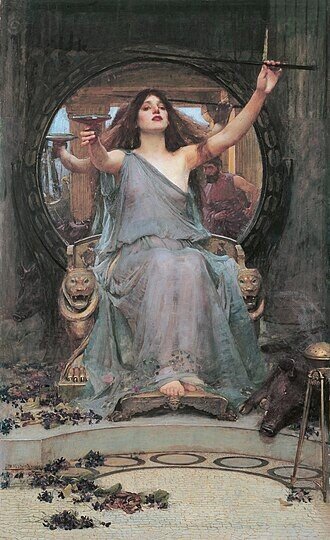
*oil on canvas
*148 x 92 cm
*1891
When her spell fails against him, the balance of power changes.
Circe restores his men to human form.
And then something unexpected happens.
Instead of immediately leaving, Odysseus and his crew remain on her island for an entire year.
Eventually, though, home calls again.
And Circe warns him about what lies ahead.
Including one of the most famous dangers in all of Greek mythology.
Why Would Anyone Want to Hear the Sirens?
The Sirens are deadly because of their song.
Sailors who hear them become irresistibly drawn toward them, leading to destruction.
The obvious solution is:
don’t listen.
Odysseus tells his crew to block their ears with wax.
Problem solved.
Except Odysseus doesn’t block his own ears.
Instead, he tells his men to tie him tightly to the mast and refuse to release him—no matter how desperately he begs.
Why?
Because he wants to hear the song.
He knows it’s dangerous.
He knows it could kill him.
And he still wants to know what it sounds like.
I think this may be one of my favorite parts of the entire story.
Odysseus doesn’t simply avoid temptation.
He creates a system that allows him to experience it without being destroyed by it.
And once again, his curiosity is both admirable and dangerous.

Scylla and Charybdis: When There Is No Good Choice
Then comes another story whose influence survives in language today.
Odysseus must sail through a dangerous passage.
On one side is Scylla, a monster capable of snatching sailors from the ship.
On the other is Charybdis, a terrifying whirlpool that can destroy the entire vessel.
There is no safe route.
So Odysseus chooses the lesser disaster.
He sails closer to Scylla.
Six men die.
But the ship survives.
That impossible choice gave rise to the expression:
“between Scylla and Charybdis.”
In other words, being trapped between two terrible options.
Knowing the story suddenly makes an old expression much more vivid.
Eventually, Odysseus Loses Everyone
Odysseus and his men are repeatedly warned not to harm the sacred cattle of Helios, the sun god.
But after being trapped by bad weather and running out of food, his starving crew finally kills the cattle while Odysseus is away from them.
The consequences are catastrophic.
Zeus destroys their ship.
Every member of the crew dies.
Except Odysseus.
He is now completely alone.
After drifting at sea, he eventually reaches Ogygia, the island of Calypso.
And here the story takes another interesting turn.
Calypso Offers Him Something Better Than Home
Calypso keeps Odysseus on her island for years and offers him something extraordinary:
immortality.
Stay with her and he could escape aging and death.
Yet Odysseus still longs for Ithaca.
He spends his days longing for home until the gods finally intervene and Calypso is told to let him leave.
Think about that choice.
After war, monsters, shipwrecks and the deaths of every one of his companions, Odysseus is offered an escape from ordinary human life itself.
He refuses.

He would rather return to Penelope, grow old and eventually die than live forever away from home.
Suddenly, The Odyssey doesn’t feel like a story about monsters anymore.
It’s a story about what makes somewhere home.
Twenty Years Later, He Finally Reaches Ithaca
Ten years of war.
Ten years trying to return.
Odysseus finally reaches Ithaca after twenty years away.
But returning to the island doesn’t mean he has truly returned home.
His palace has been overrun by men competing to marry Penelope and take his place.
His son Telemachus, a baby when Odysseus left, is now an adult.
And Penelope has spent years trying to delay remarriage.
One of her tricks is wonderfully simple.
She promises to choose a new husband after she finishes weaving a burial shroud for Odysseus’ father.
During the day, she weaves.
At night, she secretly undoes her work.
She keeps the deception going for years.
Odysseus eventually returns to his own palace disguised as a beggar, discovers who remains loyal to him, reunites with Telemachus and prepares to reclaim his home.
And the Final Proof Isn’t a Battle
Eventually, Odysseus defeats the suitors.
But Penelope still doesn’t immediately accept that this man is really her husband.
After twenty years, why should she?
So she tests him.
She gives instructions suggesting that their marriage bed should be moved.
Odysseus reacts immediately.
The bed cannot simply be moved.
He had built their bedroom around a living olive tree, shaping the trunk itself into part of the bed.
Only Odysseus and Penelope know that.
And that’s how she knows.
The man standing before her really is her husband.
I love this ending.
It isn’t the Trojan Horse that proves who Odysseus is.
It isn’t the Cyclops.
It isn’t his battles or his reputation.
It’s a private memory shared between two people.
After a story filled with gods and monsters, one small detail about home finally reveals his identity.
Why The Odyssey Still Works Thousands of Years Later
Before watching the movie, I thought of The Odyssey mostly as a collection of famous Greek myths.
After looking deeper into the story, I see it differently.
Odysseus isn’t simply a hero defeating monsters.
He’s clever enough to escape impossible situations—and arrogant enough to create new ones.
He’s curious even when curiosity is dangerous.
He makes decisions that save some people and cost others their lives.
He eventually loses every member of his crew.
He is offered immortality.
And still, he keeps trying to go home.
That’s probably why the story has survived for so long.
The monsters are memorable.
But underneath them is something much simpler:
a man who has been away for too long trying to find his way home.
But Where Did The Odyssey Actually Take Place?
And this is where the story became even more interesting to me.
Ithaca is a real island.
And Troy isn’t simply a name from mythology either: the archaeological site traditionally identified with Troy lies in modern-day Türkiye.
But what about everything else?
Where was the land of the Cyclopes?
Where was Circe’s island?
Could Scylla and Charybdis have been inspired by a real stretch of sea?
Where was Calypso’s island?
For centuries, people have tried to map Odysseus’ journey onto the real Mediterranean.
But mythology, geography and storytelling are mixed together so deeply in The Odyssey that there is no single universally accepted route.
And maybe that’s what makes the next question so interesting.
Which places connected to The Odyssey can we actually visit today?
That’s where I want to go next.
Because sometimes, knowing the story behind a place can completely change the way we experience it.
And that’s exactly what MASIL is about: traveling deeper by discovering the stories behind the places we visit.