
If you’re looking into the US CPA for Koreans, you’ve probably asked yourself this question at some point:
Will passing the CPA actually change my career?
I wondered the same thing.
I wasn’t an accounting major, and I didn’t start my career at an accounting firm.
I studied international trade in Korea and spent about four years working at a large Korean company. Then I started studying for the US CPA while working full-time.
That decision eventually took me much further than I expected.
I passed the US CPA exams, left my job in Korea, went to graduate school in New York, worked at accounting firms in the United States, and eventually returned to Korea.
And interestingly, I’m now back in international trade.
It might sound like I ended up where I started.
But I don’t think I did.
Along the way, I added accounting, auditing, financial analysis, and international work experience to the background I already had.
So rather than explaining how to pass the CPA exam in this post, I want to talk about something broader:
What did the US CPA actually do for my career?
And if I could go back, would I do it again?
I Didn’t Start My Career in Accounting
I studied international trade at university in Korea.
After graduation, I joined a large Korean company and worked there for about four years.
My work involved dealing with overseas suppliers, importing raw materials, monitoring international commodity markets and exchange rates, and handling issues related to tariffs, customs, and international transactions.
So my career didn’t begin with accounting.
But after working for several years, I started thinking more seriously about a question that I think many professionals eventually face:
What kind of expertise do I want to build my career around?
Work experience was valuable, but I also wanted to develop knowledge that I could carry with me beyond one company or one specific position.
That’s when I became interested in the US CPA.
Why the US CPA?
What attracted me to the US CPA wasn’t simply the title of “CPA.”
I saw accounting as a language for understanding businesses.
No matter the industry, companies have revenue, costs, assets, liabilities, and cash flows. Understanding how those numbers are created and connected seemed like a skill that could be useful in many different careers.
I was also interested in gaining experience outside Korea.
I had always been interested in studying or working abroad, and I thought an American accounting qualification might give me more options in the future.
At the time, I had no idea that it would eventually lead me to graduate school in New York, working at accounting firms in the U.S., and then returning to Korea with a completely different combination of experience.
I was simply trying to create another possibility for myself.
Studying for the US CPA While Working Full-Time
I started preparing for the US CPA while working in Korea.
Because I wasn’t an accounting major, there was a lot to learn from scratch. And because I had a full-time job, most of my studying had to happen after work and on weekends.
Eventually, I passed all four sections of the exam.
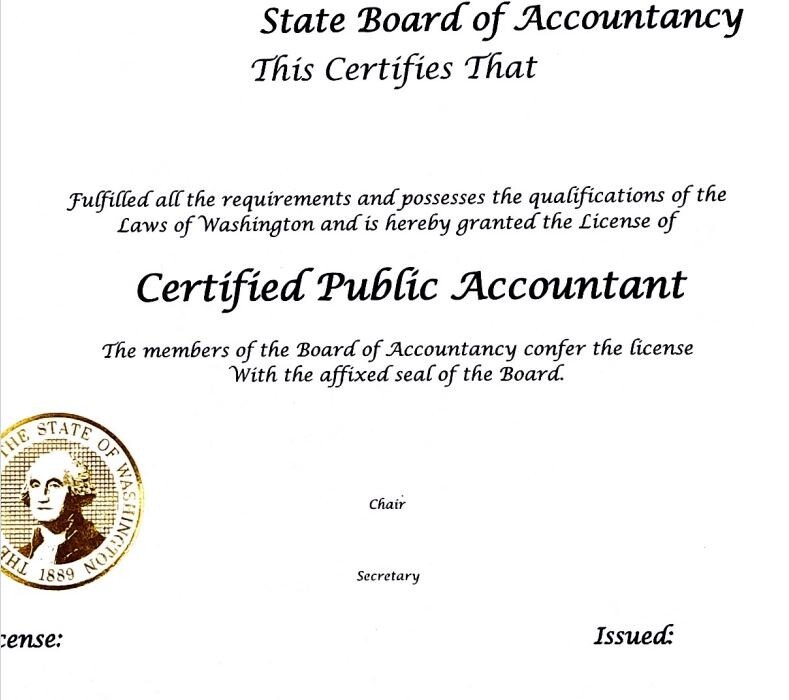
I won’t go too deeply into the exam itself here.
How I studied while working, what was difficult as a non-accounting major, and how I approached the four sections deserve separate posts of their own.
What became more important after passing was a different question:
Now that I have this qualification, what can I actually do with it?
Passing the exam didn’t suddenly transform my career overnight.
Instead, it gave me the confidence and foundation to consider a much bigger next step.
After the US CPA, I Decided to Go to the U.S.
Eventually, I left my job in Korea and moved to the United States.
I enrolled in a graduate program at Baruch College in New York City.
For someone who had already spent several years working in Korea, this wasn’t a small decision.
I was giving up a stable salary, becoming a student again, and taking on the cost of tuition and living in New York.
But studying for the US CPA had introduced me to a new field, and I wanted to take it further.
Rather than stopping after passing an exam, I wanted to experience what it would be like to actually study and work in the United States.
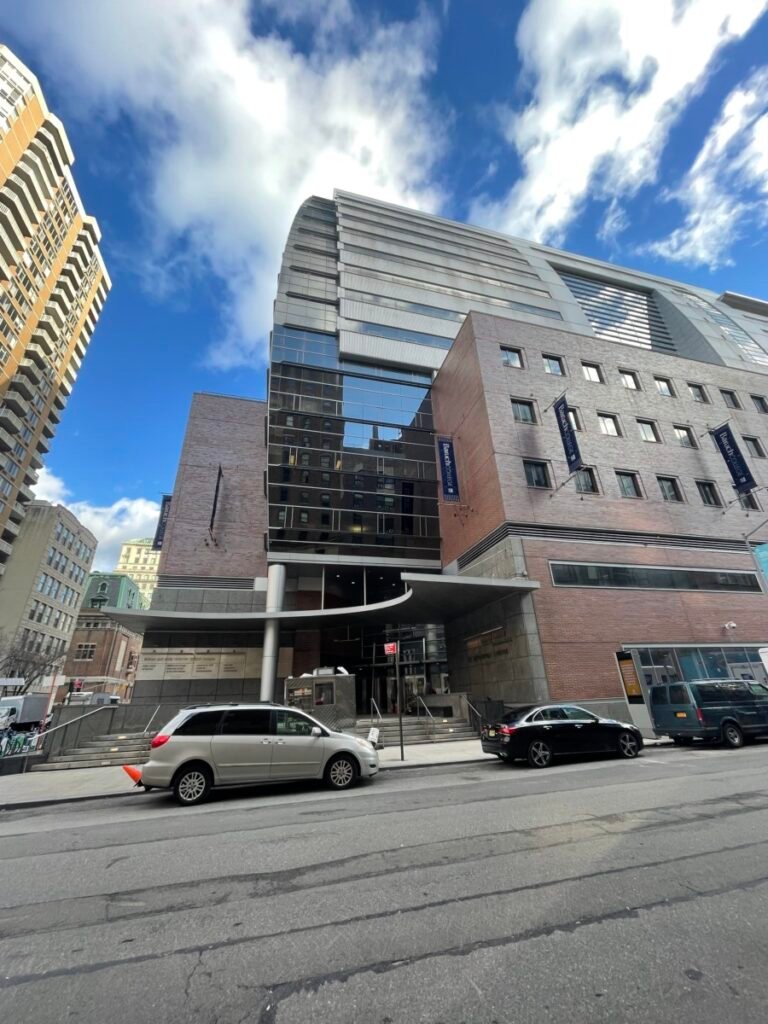
Baruch College in New York City, where I attended graduate school after passing the US CPA exam.
Looking back, I think the decisions that came after the US CPA ultimately had an even bigger impact on my career than the credential itself.
The qualification didn’t determine my path.
It gave me another path to explore.
Studying in New York and Working at U.S. Accounting Firms
After graduate school, I started working at accounting firms in the United States, where I gained experience in external audit.
This was the point when accounting stopped being something I had only studied for an exam.
I was now reviewing actual financial statements, understanding internal controls, working with client data, and seeing how companies produced and managed their financial information.
I also quickly learned that passing the CPA exam and doing the actual job are two very different things.
Technical accounting knowledge mattered, of course.
But so did Excel, data analysis, communication, time management, understanding client-provided information, and identifying problems when something didn’t make sense.

A view from my time living in New York — a very different chapter from my career back in Korea.
For me, the value of working in the U.S. wasn’t simply being able to say that I had found a job in America.
It was the opportunity to take what I had studied and use it in a real professional environment, in another country and another language.
Then I Returned to Korea
I could have continued building my accounting career in the United States.
Instead, I eventually decided to return to Korea.
And this is where my career took another interesting turn.
I didn’t return to traditional accounting.
I went back into international trade, the field I had originally studied at university.
Today, my work involves international trade matters, including anti-dumping investigations and trade remedies.
At first glance, my career path might look a little strange.
I studied international trade, worked in Korea, studied accounting, moved to the U.S., worked in accounting firms, returned to Korea…
…and ended up in international trade again.
But once I started doing the work, I realized that these experiences weren’t as disconnected as they might seem.
I Returned to International Trade — But With a Different Skill Set
My current work often requires analyzing companies’ sales data, cost information, and financial records.
It’s not enough to simply look at a number.
You need to understand where it came from, how the underlying transaction was recorded, and how it relates to the company’s accounting and cost structure.
That’s where my accounting background became surprisingly useful.
The knowledge I gained while studying for the US CPA and the experience I gained reviewing financial information at accounting firms now help me understand the companies and data I work with in international trade matters.
Even my earlier experience dealing with international transactions and purchasing connects with parts of what I do today.
Looking back, my career has followed something like this:
International Trade → US CPA & Accounting → U.S. Experience → International Trade
It looks like a circle.
But I didn’t return to the same point.
I came back with a broader set of skills and a different way of looking at businesses.
And for me, that’s one of the most important things the US CPA ultimately gave me.
The Biggest Value of the US CPA for Koreans: More Career Options
The US CPA has played an important role in my career.
It gave me a foundation in accounting, helped lead me toward graduate school in the U.S., and eventually allowed me to gain professional experience at American accounting firms.
I still use much of what I learned when I analyze financial statements, costs, and company data today.
But I don’t think the biggest benefit was simply adding another credential to my résumé.
For me, the biggest benefit was having more options.
Without studying for the US CPA, I’m not sure I would have made the decision to attend graduate school in the United States.
Without that decision, I probably wouldn’t have experienced working at an accounting firm in America.
And without those experiences, I would probably approach my current work in Korea very differently.
One decision created another.
But the US CPA Isn’t the End of the Story
Getting the US CPA and turning it into a career are two different things.
In my case, passing the exam was followed by graduate school, job hunting in the U.S., professional experience at accounting firms, and eventually another career transition after returning to Korea.
So I think the value of the US CPA can vary greatly depending on what you build around it.
If someone asked me:
“Will the US CPA help my career?”
My answer would be:
Yes, it certainly can — especially if you’re interested in accounting, business, or building a more international career. But what you do after earning it matters just as much as the credential itself.
At least, that has been true for me.
My U.S. Experience Didn’t Disappear When I Returned to Korea
There’s another thing I’ve realized since returning home.
International experience doesn’t become worthless just because you don’t stay abroad forever.
The experience of working professionally in English, adapting to a different workplace culture, reviewing financial information from different companies, and finding a job in an unfamiliar environment didn’t disappear when I got on a plane back to Korea.
I brought those experiences home with me.
That’s why I don’t think the value of studying or working abroad should be measured only by whether it leads to a permanent career overseas.
Sometimes, the more interesting question is:
How can you combine that international experience with what you already know when you return home?
For me, the answer became international trade.
Would I Study for the US CPA Again?
Yes.
Not because I think the US CPA is a magical credential that guarantees a certain career.
It isn’t.
But the decision to pursue it started a series of experiences that had a major influence on where I am today.
I learned accounting.
I moved to the United States.
I studied in New York.
I worked at accounting firms.
And eventually, I returned to Korea and combined those experiences with my original background in international trade.
When I first opened a US CPA textbook after work in Korea, I had absolutely no idea that this was where it would lead.
And that’s probably the biggest lesson I’ve taken from the experience.
A career doesn’t always have to move in a straight line.
Sometimes a new qualification or skill doesn’t produce an immediate result.
Instead, it creates an option.
And a few years later, that option can take you somewhere you never expected.
For me, the US CPA was one of those options.
What’s Next in My US CPA & Career Story?
This is the first post on MASIL where I’m sharing the bigger picture of my US CPA and career journey.
I intentionally haven’t gone too deeply into each stage because there’s a lot more I want to write about separately.
In future posts, I’ll share more about:
- Why I decided to pursue the US CPA while working in Korea
- How I prepared for the CPA exam as a non-accounting major
- Studying for the US CPA while working full-time
- Why I chose graduate school in the United States
- What studying at Baruch College in New York was actually like
- How I approached finding my first accounting job in the U.S.
- What working at an American accounting firm was like
- Why I eventually returned to Korea
- Whether the US CPA is actually useful in the Korean job market
- How accounting experience can be applied to international trade and anti-dumping work
There’s already plenty of information online about CPA exam requirements and study materials.
So rather than simply repeating that information, I want to use MASIL to document something different:
What happened after a Korean professional decided to pursue the US CPA — and how that decision eventually connected Korea, New York, accounting, and international trade.
If you’re a Korean professional considering the US CPA, graduate school abroad, or an international career, I hope my experience gives you one real-world example to consider.
And if you’re simply curious about what a Korean professional’s career can look like across Korea and the United States, welcome to the story.