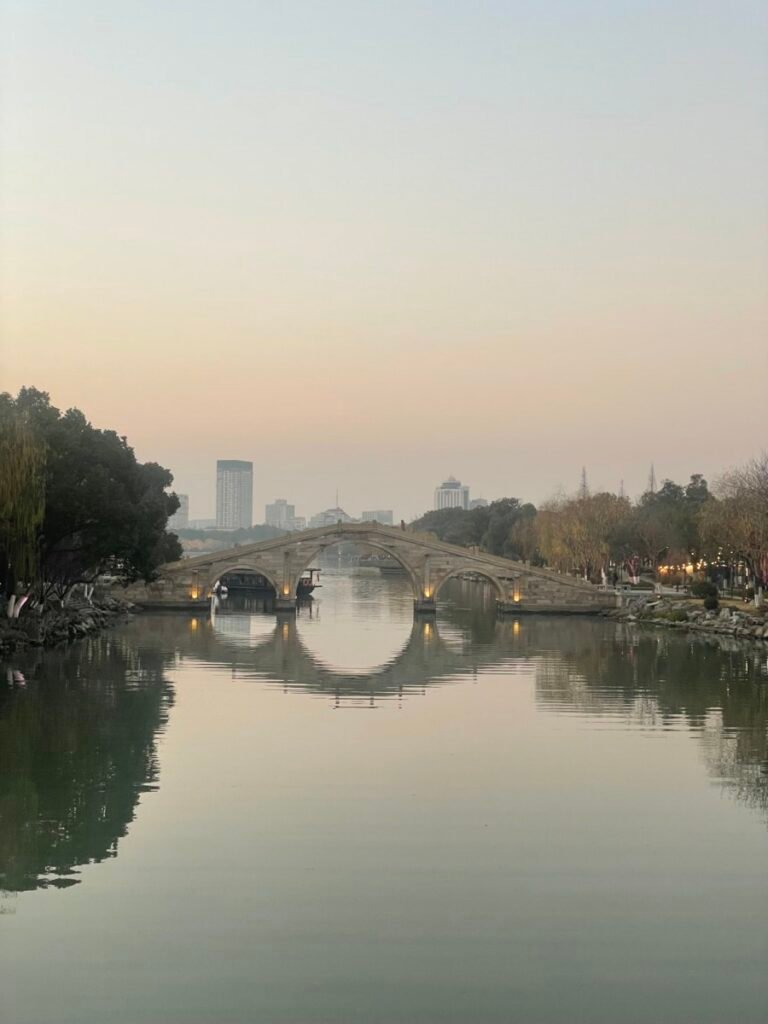
Gyeongju at night is one of the best ways to experience the city’s history, especially when you can walk between ancient Silla sites as daylight fades.
On this trip, my wife and I kept things simple.
We started around Cheomseongdae, one of Gyeongju’s most recognizable historic landmarks. As daylight disappeared, we continued toward Donggung Palace and Wolji Pond, where the experience changed completely once the lights came on.
And after spending the evening walking through the old Silla capital, we ended the night with something much more immediate:
A bowl of mulhoe (물회) filled with raw seafood.
It wasn’t a complicated itinerary.
But if I were recommending an easy evening in Gyeongju to someone visiting Korea, this is a route I would happily do again.
Starting the Evening at Cheomseongdae
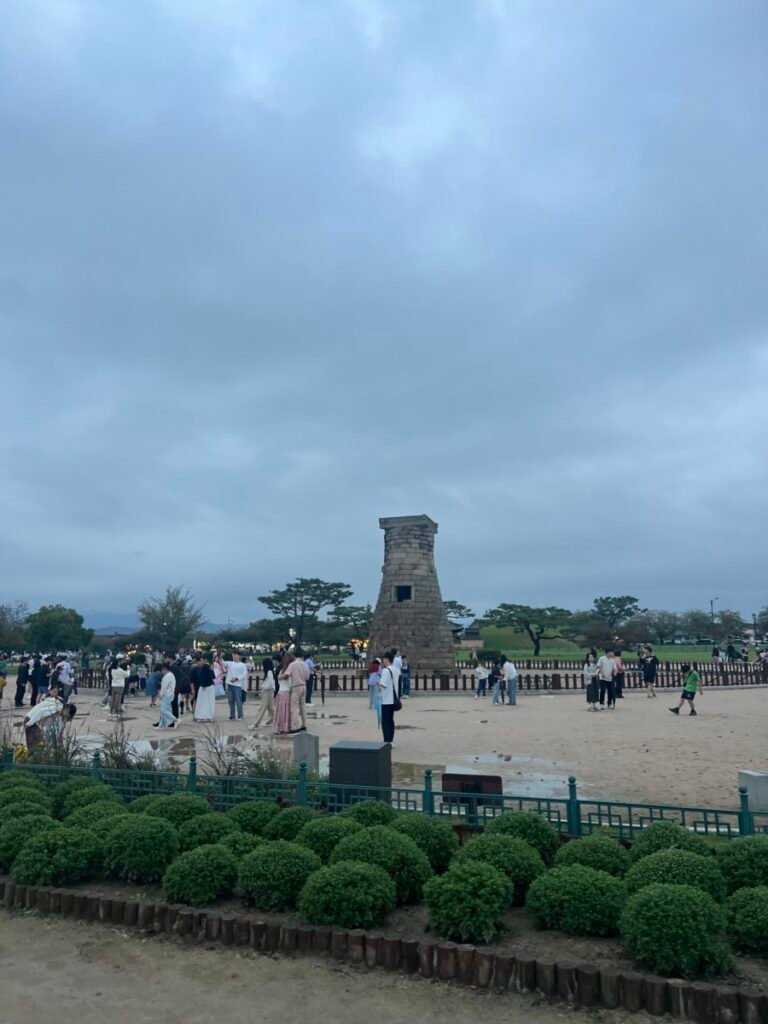
Our first stop was Cheomseongdae (첨성대).
If you’ve seen travel photos of Gyeongju before, you’ve probably seen this unusual stone structure.
It isn’t enormous.
In fact, when I saw it surrounded by an open field and crowds of visitors, what struck me was how modest it looked compared with many famous historical monuments.
But its significance is much larger than its size.
Cheomseongdae dates to the Silla period and is traditionally understood as an astronomical observatory. More importantly for understanding Gyeongju, it sits within the Wolseong Belt of the UNESCO-listed Gyeongju Historic Areas, alongside archaeological remains connected to Silla’s royal capital.
Standing there also gives you a sense of what makes Gyeongju different from Seoul.
In Seoul, many major historic sites are enclosed behind palace walls or surrounded by the modern city.
Gyeongju often feels different.
Here, history seems scattered across the landscape.
Royal tombs rise from parks. Archaeological sites appear beside roads. Ancient monuments stand in large open fields while people walk, cycle and take photographs around them.
Cheomseongdae felt like part of that landscape rather than something separated from it.
The weather wasn’t perfect when we visited. The sky was cloudy and there were plenty of other visitors around.
But I actually liked seeing the monument this way.
It didn’t feel like a museum exhibit.
It felt like part of the city.
Why Gyeongju at Night Feels Different
To understand why there is so much history concentrated here, you have to understand what Gyeongju once was.
It was the capital of the Silla Kingdom, which ruled for nearly a thousand years, from 57 BCE to 935 CE.
UNESCO describes the historic areas in and around Gyeongju as exceptional evidence of Silla’s cultural achievements, particularly its Buddhist art, temples, palaces, royal tombs and secular architecture. The Gyeongju Historic Areas were inscribed on the World Heritage List in 2000.
That’s one reason I don’t think Gyeongju should be treated as a place where you simply collect photographs of famous attractions.
The individual monuments make much more sense when you realize that you’re moving through pieces of what was once the capital of a kingdom.
And the nice thing about this particular route is that you can experience two very different sides of that history within a short walk.
Walking From Cheomseongdae to Donggung and Wolji
One of the most useful things about this part of Gyeongju is how close the major sites are to each other.
You don’t necessarily need to get back into a car after visiting Cheomseongdae.
Gyeongju’s official tourism information describes Donggung Palace and Wolji Pond as roughly a 5–7 minute walk from Cheomseongdae.
That makes this a particularly easy evening route:
Cheomseongdae → walk toward Donggung and Wolji → wait for darkness → see the illuminated pond.
For us, the timing worked naturally.
We saw Cheomseongdae while there was still light in the sky.
Then the evening gradually became darker.
By the time we reached Donggung and Wolji, it felt like we had entered a completely different place.
Donggung and Wolji Is a Place I Would Save for Night
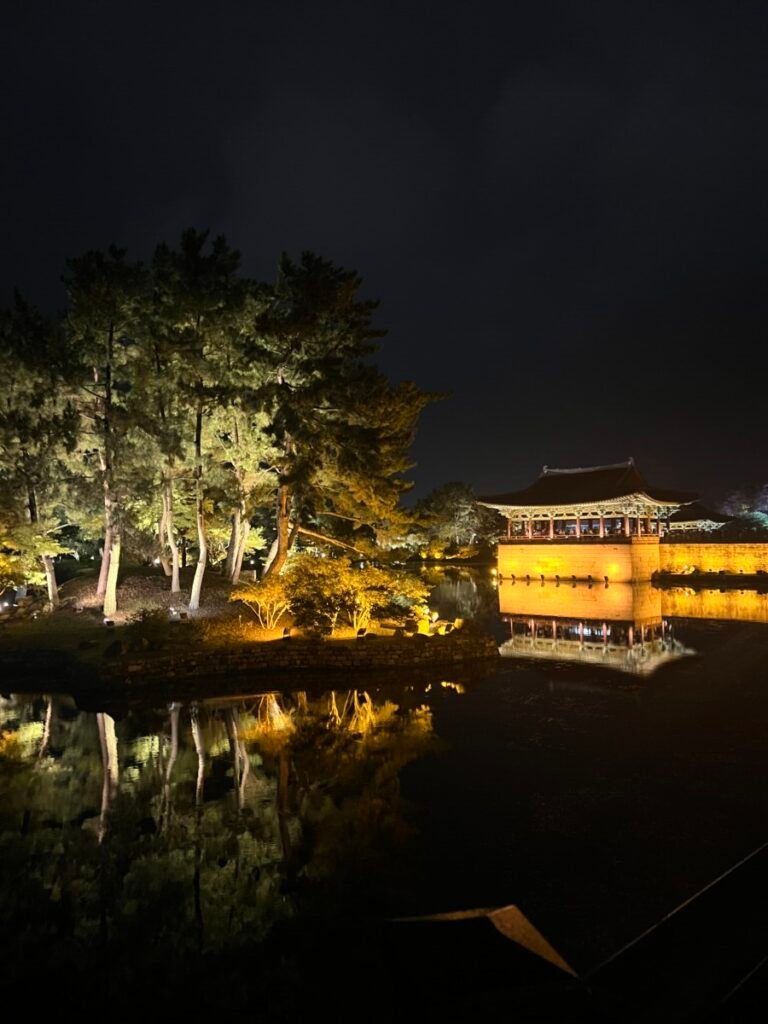
If Cheomseongdae felt quiet and understated, Donggung Palace and Wolji Pond (동궁과 월지) was the opposite.
This was the part of the evening that impressed me most visually.
The restored traditional buildings were illuminated against the dark sky, while the lights from the palace, stone walls and trees reflected almost perfectly in the water.
The reflection is what stayed with me.
Without it, the buildings would still be beautiful.
With it, the entire scene seems to double.
And this isn’t just something travelers have discovered through Instagram.
Gyeongju’s own tourism guide specifically recommends Donggung and Wolji in the evening and describes the changing colors around sunset and the illuminated buildings reflected on the pond.
After seeing it myself, I understand why.
If I had only one opportunity to visit Donggung and Wolji, I would choose the evening rather than the middle of the day.
What Was Donggung Palace and Wolji Pond?
The beautiful night view can make it easy to forget that this was once part of Silla’s royal world.
According to Gyeongju City’s historical introduction, King Munmu had the pond constructed in 674, and Donggung was built several years later, in 679. Donggung served as a palace associated with Silla’s crown prince, while buildings around Wolji were also used for banquets and receiving important guests.
Some travelers may recognize the site’s older name:
Anapji Pond (안압지).
That name became associated with the site after the Silla structures had fallen into ruin. The historical name Wolji was later restored, which is why signs and modern travel information now generally use Donggung Palace and Wolji Pond.
Knowing that made the night view more interesting to me.
Today we visit because the reflections are beautiful.
More than a thousand years ago, however, this was part of a royal landscape in the capital of Silla.
That’s exactly the kind of contrast I like finding when traveling around Korea.
A Practical Tip: Plan These Two Places Together
If you’re planning a Gyeongju trip yourself, I wouldn’t necessarily treat Cheomseongdae and Donggung and Wolji as two completely separate destinations.
They work very well as one evening route.
My preference would be:
Arrive around Cheomseongdae before sunset → explore the surrounding historic area → walk toward Donggung and Wolji → enter around dusk or after dark.
The exact timing will obviously depend on the season.
But the basic idea is simple: use the remaining daylight for the open landscape around Cheomseongdae, and save Donggung and Wolji for when the lights and reflections become visible.
Gyeongju City currently lists Donggung and Wolji’s opening hours as 09:00–22:00, with final entry at 21:30, but hours and admission details can change, so I would check the official information before visiting.
That small bit of planning can make a big difference.
After Walking Through Silla History, We Went for Mulhoe
Eventually, however, we were finished with history for the night.
We were hungry.
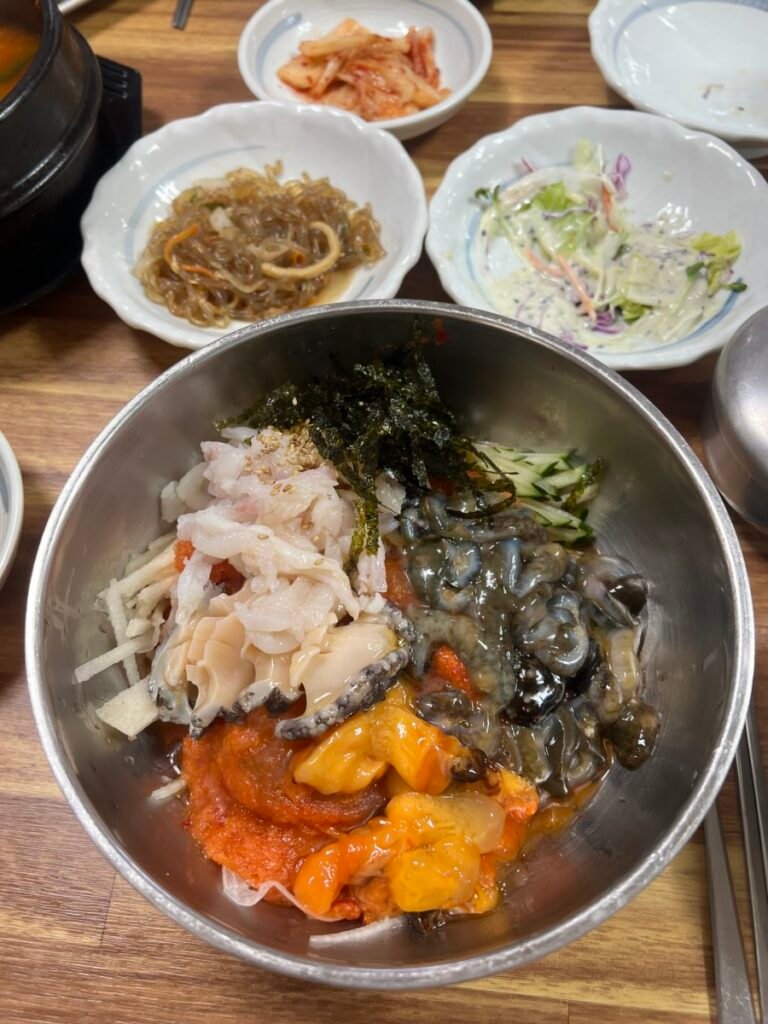
So we went to eat mulhoe (물회).
For someone unfamiliar with Korean food, mulhoe can be a slightly surprising dish.
The name literally combines mul (water) and hoe (raw fish), but describing it simply as “raw fish in water” doesn’t do it much justice.
Depending on the restaurant and region, a bowl can contain sliced raw fish or other seafood, vegetables and a cold, spicy-sweet broth.
The version in front of me was packed with seafood.
There were different textures and colors all mixed together, along with shredded vegetables and seaweed.
It looked almost chaotic before mixing it.
That’s part of the fun.
After walking around Gyeongju for the evening, something cold and fresh was a satisfying way to finish the day.
And meals like this are one reason I don’t want MASIL travel stories to stop at the entrance of a historic site.
The monuments tell one part of a place.
What you eat after leaving them is another.
History in Gyeongju Doesn’t Feel Far Away
What I remember most about this evening wasn’t one individual historical fact.
It was the transition.
We began with Cheomseongdae standing beneath a cloudy evening sky.
Then we walked through a part of what had once been Silla’s capital.
Darkness arrived.
Donggung and Wolji lit up.
And eventually we left ancient history behind and sat down for dinner like anyone else spending an evening in Gyeongju.
That’s what I enjoy about this city.
Gyeongju has an extraordinary concentration of historical sites, but they don’t always feel isolated from everyday life.
UNESCO’s Gyeongju Historic Areas are actually divided into several archaeological zones containing palaces, royal tombs, Buddhist monuments and other remains of Silla. Cheomseongdae and the palace remains around Wolji are part of the Wolseong Belt.
You can spend the afternoon among ancient tombs, walk past a monument from the Silla period in the evening, watch a royal pond light up after sunset, and then finish the day eating mulhoe.
For me, that’s a better way to experience Gyeongju than rushing from landmark to landmark just to say I’ve seen them.
The places become more memorable when you understand how they connect.
And sometimes the best travel route isn’t particularly complicated.
Two historic sites, one short walk, and dinner afterward were enough for a very good evening in Gyeongju.