After exploring The Odyssey in Real Life, one question kept coming back to me:
After learning why Odysseus’ journey home took ten years, one question kept coming back to me:
Some of them, yes.
Ithaca is a real Greek island. Troy is a real archaeological site. And one of the most terrifying episodes in The Odyssey has long been associated with a narrow stretch of sea between Sicily and mainland Italy.
But there’s one important thing to know before trying to follow Odysseus on a modern map.
There is no universally accepted route for his journey.
Homer’s Odyssey mixes recognizable geography with mythology, gods, monsters, and mysterious lands. Over the centuries, people have proposed very different locations for many of Odysseus’ adventures.
So rather than pretending we know exactly where every episode happened, let’s look at three real places connected to The Odyssey that you can actually visit today.
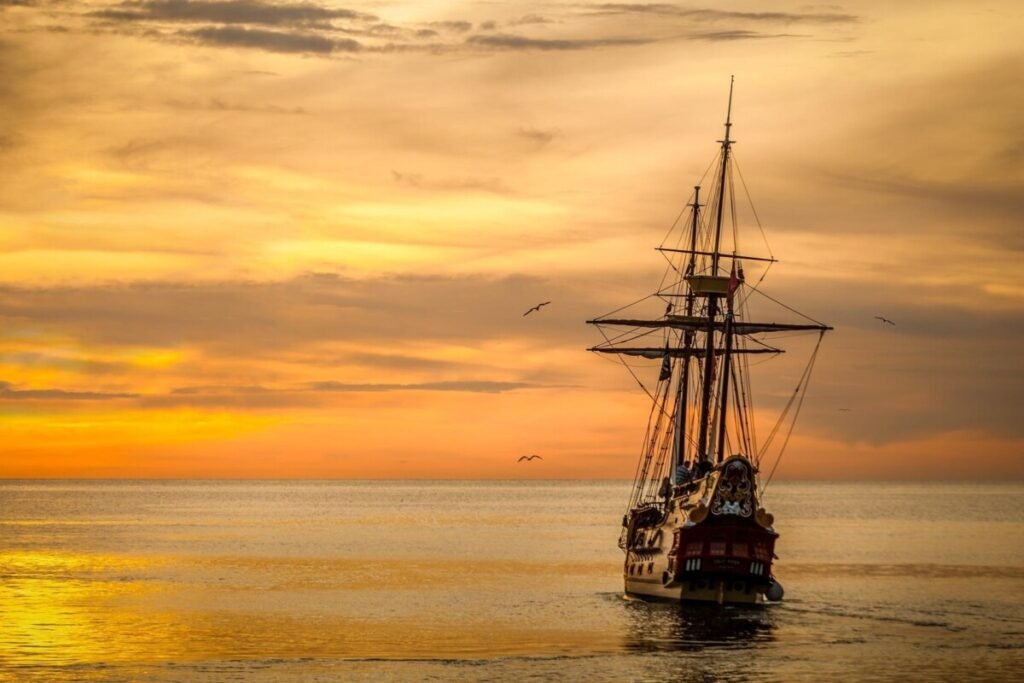
1. Ithaca, Greece — The Home Odysseus Spent 10 Years Trying to Reach
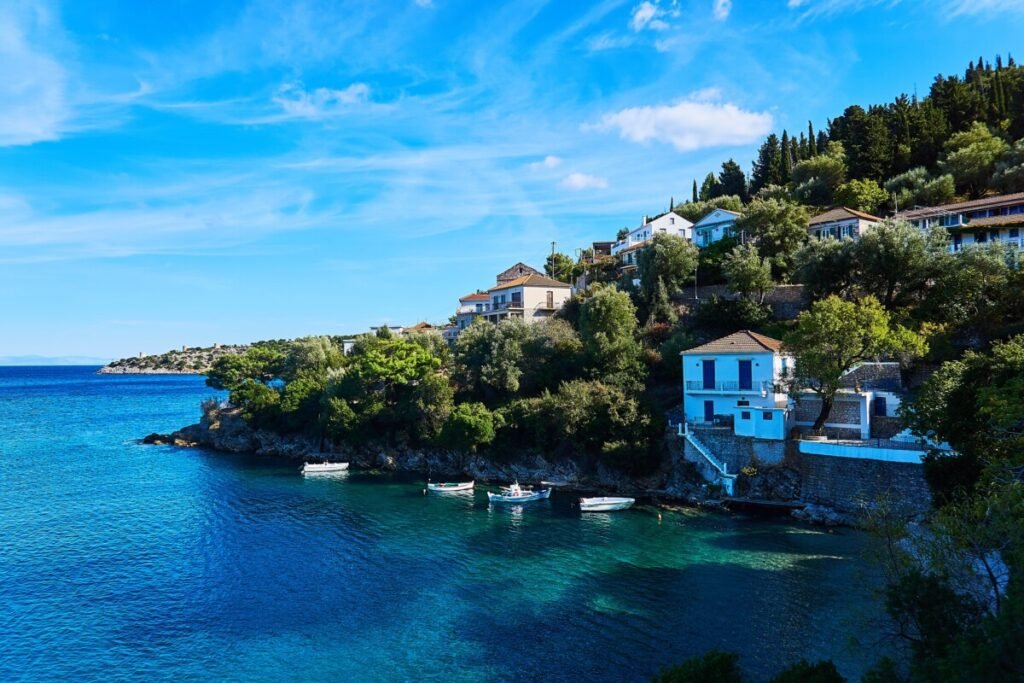
If there is one real place most closely associated with The Odyssey, it is Ithaca.
Located in the Ionian Sea off western Greece, Ithaca is the legendary kingdom of Odysseus.
It is where Penelope waits for him.
It is where his son Telemachus grows up.
And most importantly, it is the place Odysseus spends ten years trying to reach after another ten years fighting in the Trojan War.
That makes Ithaca much more than just another beautiful Greek island.
It represents the central idea of The Odyssey:
home.
There is even archaeological evidence showing that ancient people on Ithaca associated the island with Odysseus. Finds from Loizos Cave suggest that Odysseus was worshipped there in antiquity.
That does not prove that the legendary Odysseus was a real historical king, of course.
There have also been attempts to identify archaeological remains on Ithaca as the palace of Odysseus, but those interpretations remain debated.
And perhaps we don’t need to find his actual palace to appreciate the island.
Imagine standing beside the Ionian Sea knowing that generations of people have connected this landscape with one of the world’s oldest and most famous journeys.
After monsters, shipwrecks, angry gods, and twenty years away…
this was the place Odysseus wanted to see again.
2. Troy, Türkiye — Where the Journey Home Begins
Before the Cyclops, Circe, the Sirens, or Calypso, there is Troy.
Technically, the Trojan War belongs primarily to the world of The Iliad.
But without Troy, there is no Odyssey.
The war lasts ten years. Troy finally falls. And Odysseus begins what should have been a relatively straightforward voyage home.
Unlike many of the mysterious places he encounters later, Troy has a real archaeological site.
The ruins are located in northwestern Türkiye, near the Dardanelles.
Archaeologists have discovered multiple layers of settlement built on the site over thousands of years, and the Archaeological Site of Troy is now a UNESCO World Heritage Site.
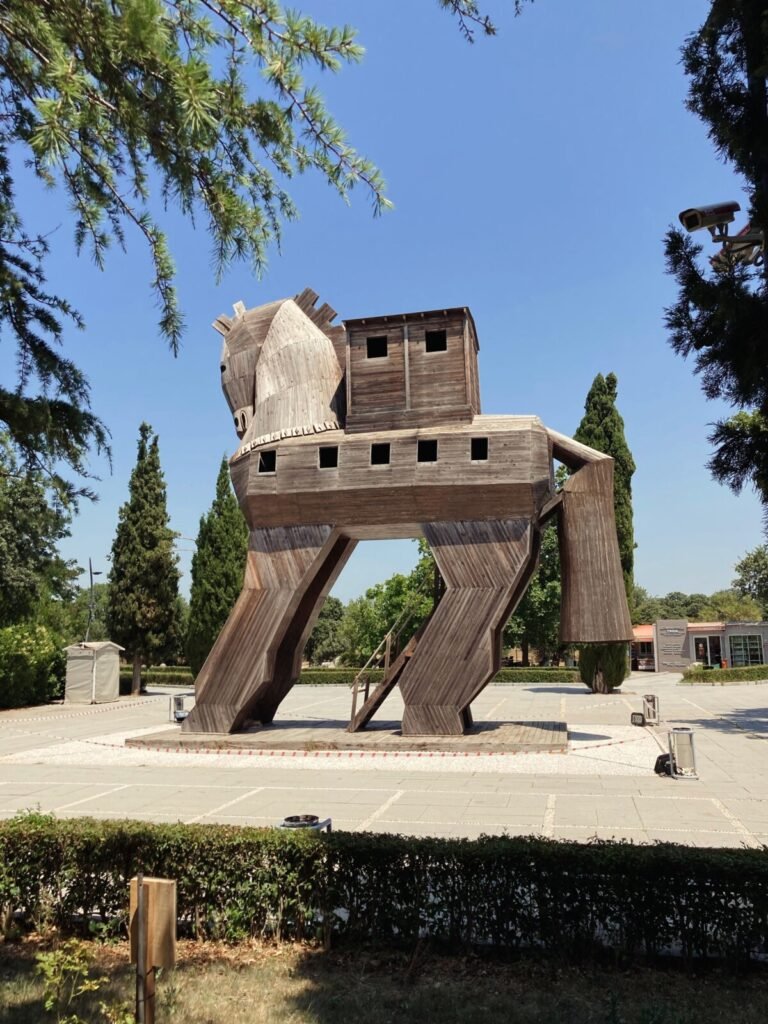
So does that mean the Trojan War happened exactly as Homer described it?
Not necessarily.
Archaeology cannot tell us that Achilles fought Hector outside these walls.
And there is certainly no archaeological proof that Greek soldiers climbed inside a giant wooden horse and waited for the Trojans to bring them inside.
But that’s exactly what makes Troy so fascinating.
The city is real. The legend is another matter.
Today, you can walk through the remains of an actual ancient city while thinking about a story people have been telling for thousands of years.
The archaeology doesn’t prove every part of the legend.
The legend doesn’t replace the archaeology.
They make each other more interesting.
And for anyone following the story of Odysseus, Troy is the natural starting point.
The war is finally over.
The ships leave Troy.
And the long journey home begins.
3. The Strait of Messina, Italy — The Real Scylla and Charybdis?
This might be my favorite connection between The Odyssey and the real world.
In the epic, Odysseus has to sail between two terrifying dangers.
On one side is Scylla, a monster that snatches sailors from passing ships.
On the other is Charybdis, a deadly whirlpool capable of swallowing a vessel.
There is no safe choice.
Odysseus sails closer to Scylla and loses six men, but his ship survives.
For centuries, this episode has commonly been associated with the Strait of Messina, the narrow body of water separating Sicily from Calabria in southern Italy.
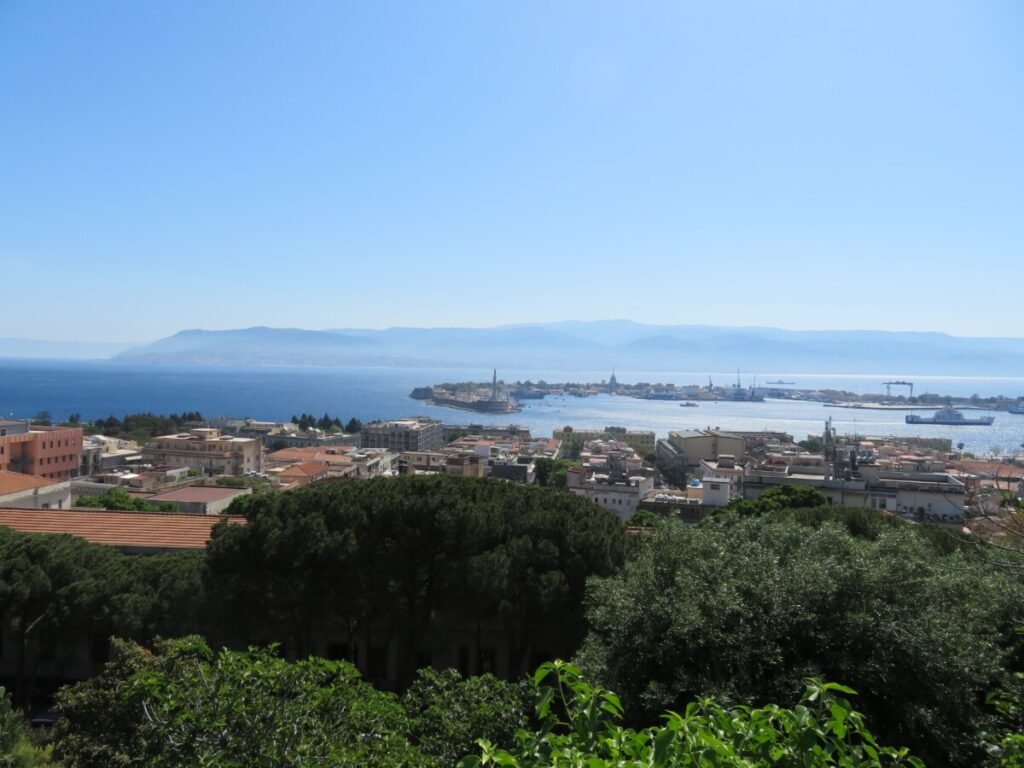
And when you look at the geography, the connection suddenly makes sense.
The strait is known for complicated currents and whirlpools created by water moving between the Ionian and Tyrrhenian seas.
Today, crossing the strait isn’t particularly terrifying.
But imagine approaching these waters thousands of years ago.
No engine.
No GPS.
No modern weather forecast.
Just a wooden ship, unpredictable currents, and a narrow stretch of sea.
Suddenly, stories about monsters hiding in the water don’t seem quite so random.
And there’s another interesting connection.
On the Calabrian side of the strait is a real coastal town called Scilla.
Today, instead of a sea monster, you’ll find a picturesque Italian town overlooking the same waters traditionally associated with the myth.
Knowing the story completely changes the way you look at the landscape.
Perhaps monsters were one way ancient sailors made sense of a dangerous sea.
The Odyssey in Real Life: Can You Follow Odysseus’ Route?
Not exactly.
You’ll find plenty of maps online claiming to show the exact route of Odysseus.
It’s better not to take them too literally.
The locations of the Cyclopes, Circe’s island, Calypso’s island, and many other episodes remain uncertain. Different researchers and writers have placed them in very different parts of the Mediterranean.
There simply isn’t enough evidence to reconstruct one definitive Odyssey itinerary.
But I don’t think that makes the journey any less interesting.
If I were planning an Odyssey-inspired trip, I would start with these three places:
Troy → Strait of Messina → Ithaca
Troy is where the war ends.
The Mediterranean represents the dangerous journey.
And Ithaca is home.
In a way, those three places capture the entire story of The Odyssey:
War. Wandering. Homecoming.
When Knowing the Story Changes the Journey
You could visit Troy without knowing anything about Homer.
You could cross the Strait of Messina without thinking about Scylla and Charybdis.
And you could spend a summer in Ithaca simply enjoying the beaches, villages, and Ionian Sea.
They’re worth visiting either way.
But knowing the story adds another layer.
A ruined city becomes the legendary starting point of Odysseus’ voyage.
A narrow stretch of sea becomes a place where ancient sailors imagined monsters waiting on either side.
And a small Greek island becomes the home one man spent ten years trying to reach.
The places haven’t changed.
The way you see them has.
And that’s exactly what MASIL is about:
Travel deeper. Discover the stories behind the places.