The H.O.T. reunion in Korea was more than just a nostalgic K-pop performance. It was a chance to see one of K-pop’s first-generation idol groups together again after more than six years.
When people outside Korea think of K-pop today, names like BTS, BLACKPINK, and Stray Kids might come to mind.
But long before K-pop filled stadiums around the world, there was H.O.T.
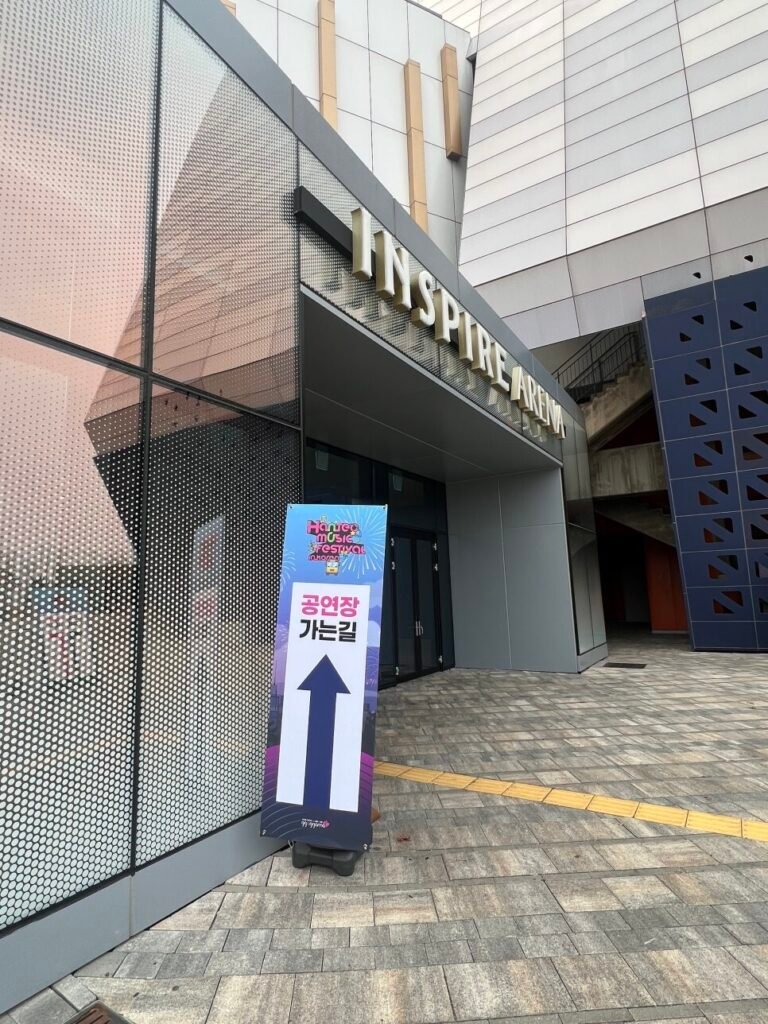
On November 23, 2025, I went to Inspire Arena in Incheon for the Hanteo Music Festival. Several K-pop artists were performing that day, but there was one reason I was especially excited to be there.
All five members of H.O.T. were performing together again.
It had been more than six years since their last full-group concert in 2019.
For someone unfamiliar with Korean pop culture, six years might not sound particularly significant.
But H.O.T. isn’t simply an old Korean boy band making another appearance.
To understand why thousands of people were so excited to see five men in their late 40s and early 50s perform songs from the 1990s, you have to go back to a very different era of K-pop.
Before BTS, There Was H.O.T.
H.O.T. debuted under SM Entertainment in 1996.
The five-member group — Moon Hee-joon, Jang Woo-hyuk, Tony An, Kangta, and Lee Jae-won — became one of the defining acts of what is now called the first generation of K-pop idols.
This was long before YouTube, TikTok, Spotify, or Instagram.
There were no viral dance challenges reaching millions of people overnight.
International K-pop fandom as we know it today barely existed.
Yet in South Korea, the phenomenon surrounding H.O.T. was enormous.
Songs such as Candy, Warrior’s Descendant, We Are the Future, and Hope became defining hits of the era.
Their influence went beyond music.
Fans copied their fashion. Fan clubs developed their own identities and colors. H.O.T.’s fans famously filled concert venues with white balloons, creating the kind of coordinated fandom culture that would later become deeply associated with K-pop.
Looking at modern K-pop fandom today — official colors, light sticks, organized fan communities and enormous concerts — it is interesting to see how much of that culture has roots stretching back decades.
H.O.T. wasn’t the beginning of Korean popular music.
But they were one of the groups that helped define what a K-pop idol group could become.
Why the H.O.T. Reunion Mattered
H.O.T. disbanded in 2001.
The members eventually pursued separate careers, and for years, seeing all five of them perform together seemed unlikely.
Then came their reunion.
They returned as a complete group in 2018 and held concerts again in 2019.
And then another long wait began.
By the time they appeared together at the Hanteo Music Festival in November 2025, more than six years had passed since their previous full-group concert.
There was another reason the timing felt significant.
2026 marks the 30th anniversary of H.O.T.’s debut.
So when news of the performance came out, this didn’t feel like just another festival appearance.
It felt like a rare opportunity to see an important piece of K-pop history return to the stage.
Arriving at Inspire Arena
The Hanteo Music Festival was held at Inspire Arena, part of the Inspire Entertainment Resort on Yeongjong Island near Incheon International Airport.
The atmosphere was already noticeable before entering the venue.
There were crowds everywhere, and many people had clearly come for the same reason.
Before the concert, I also stopped to see one of Inspire’s most famous attractions: its enormous digital ceiling.

It is easy to understand why the resort itself has become something of an attraction.
Even before entering the arena, the massive screens and visual displays make the place feel like part of the entertainment.
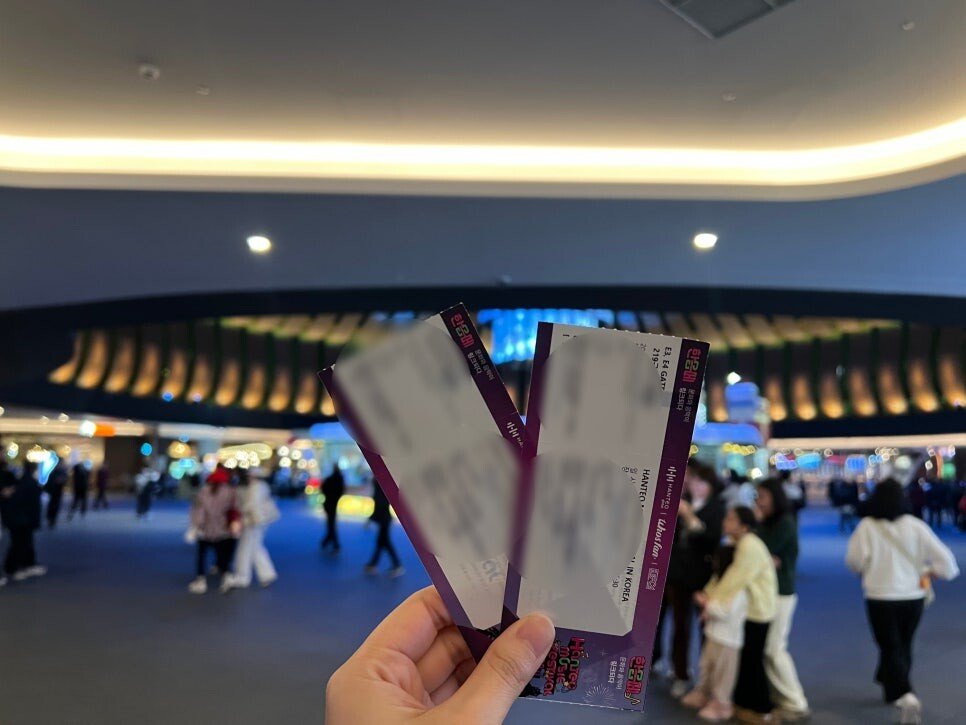
There was also the obligatory ticket photo.
And while waiting, I took a photo at one of Korea’s popular self-photo booths.
These little moments have almost nothing to do with the actual concert.
But strangely, they’re often the things that make you remember the entire day years later.
Different Generations of K-Pop on One Stage
H.O.T. wasn’t the only reason the festival was interesting.
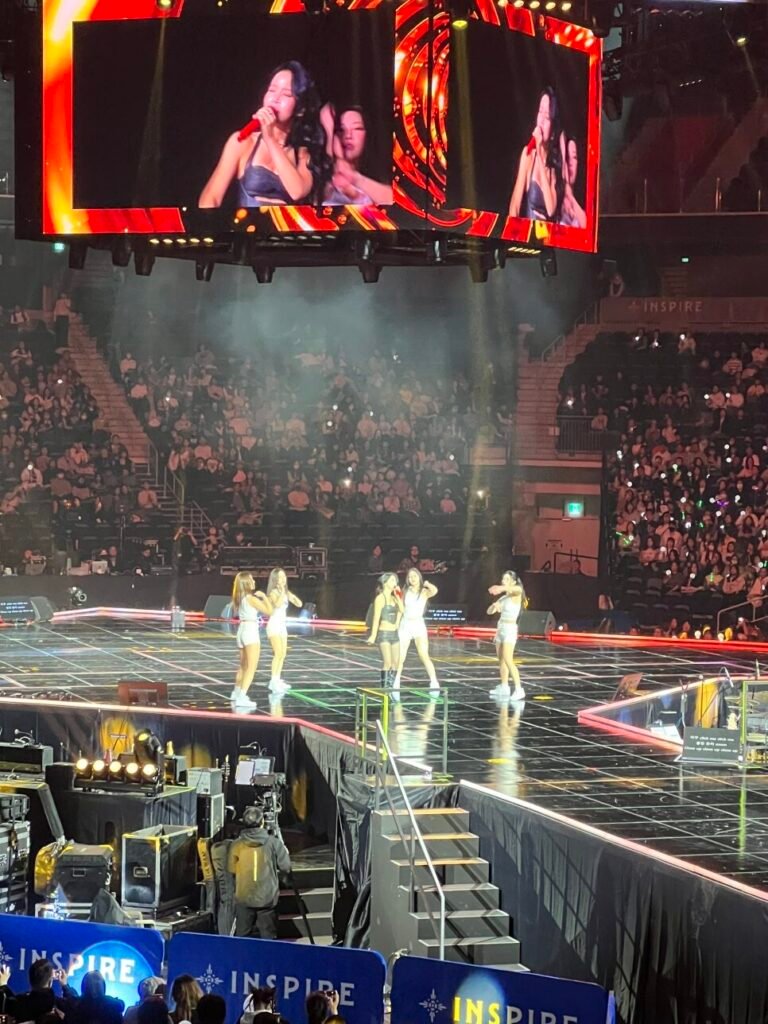
Artists including Solar of MAMAMOO, OH MY GIRL, and 2AM also performed.
Watching them at the same festival as H.O.T. created an interesting contrast.
These artists belong to very different periods of Korean pop music.
H.O.T. debuted in 1996.
2AM arrived more than a decade later.
MAMAMOO and OH MY GIRL came later still.
And today’s biggest K-pop groups belong to yet another generation.
Nearly thirty years of Korean idol culture now separate the earliest H.O.T. era from the newest generation of K-pop.
The music has changed.
The performances have changed.
The technology has changed.
And perhaps most dramatically, the audience has changed from largely Korean and Asian fandoms into a truly global one.
Seeing different generations sharing the same festival made that history feel surprisingly visible.
And Then H.O.T. Appeared
Then came the moment everyone had been waiting for.
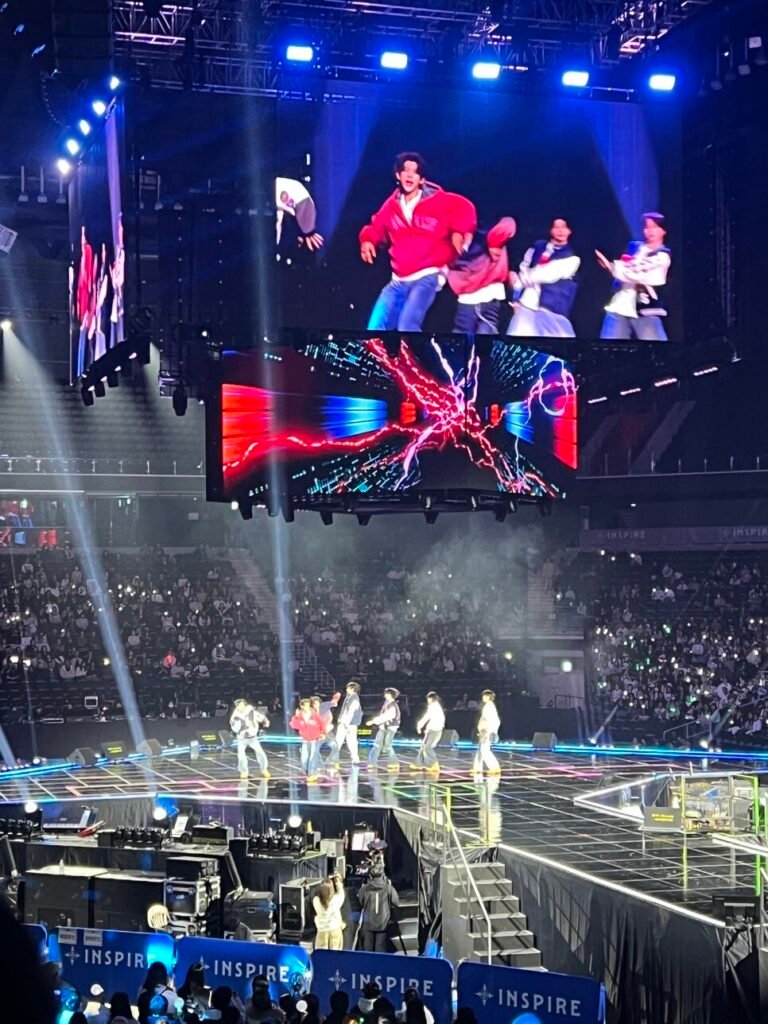
All five members walked onto the stage together.
The atmosphere inside the arena immediately changed.
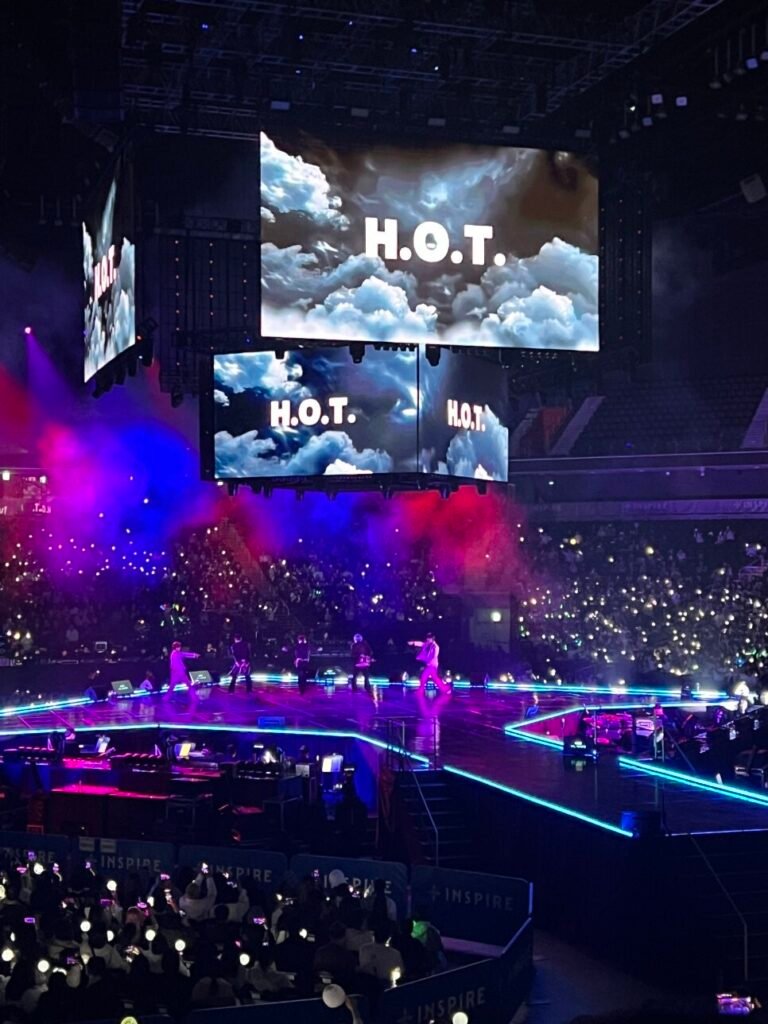
The setlist included some of their most recognizable songs, including Warrior’s Descendant, Candy, We Are the Future, and Line Up!.
And something strange happens when you hear music you haven’t thought about for years.
You remember the lyrics.
You remember the melodies.
Sometimes you even remember where you were when you used to hear them.
People around me began singing along.
And suddenly, this didn’t feel like watching some old songs being performed again.
It felt like thousands of people who had grown up during the same period had briefly returned to it together.
The performers were older.
The fans were older.
K-pop itself had changed almost beyond recognition.
But the songs hadn’t.
K-Pop Is Old Enough to Have Nostalgia Now
That was probably the most interesting realization I took away from the night.
K-pop still feels relatively new to much of the world.
Its enormous global expansion happened fairly recently.
But in Korea, modern idol culture is now approaching three decades of history.
People who grew up listening to first-generation idols are now adults with careers, families, and children of their own.
Meanwhile, new generations of teenagers are growing up with entirely different K-pop groups.
K-pop has existed long enough that it now has something every mature popular culture eventually develops:
nostalgia.
Reunion concerts are part of that.
Old songs suddenly return to the charts.
Fashion from previous generations comes back.
Younger fans discover artists their parents or older siblings listened to.
And groups that once represented youth eventually become reminders of an entire period in people’s lives.
For me, that made this H.O.T. performance more interesting than a simple reunion.
It was a small glimpse into how Korean pop culture has aged.
From White Balloons to Global K-Pop
There is something fascinating about comparing H.O.T.’s era with K-pop today.
In the 1990s, Korean fans gathered with coordinated balloons.
Today, stadiums around the world glow with synchronized Bluetooth light sticks.
Fans once waited for performances to appear on Korean television.
Today, a performance in Seoul can be watched around the world almost instantly.
K-pop fandom once operated primarily through domestic fan clubs.
Today, Korean artists can have enormous fan communities in the United States, Europe, Latin America, Southeast Asia, and beyond.
The scale is completely different.
But some things feel surprisingly familiar.
People still memorize lyrics.
They still learn choreography.
They still collect merchandise.
They still wait hours to see the artists they love.
And decades later, they may still remember exactly how those songs made them feel.
More Than an Old K-Pop Concert
When I left Inspire Arena that night, the thing I remembered most wasn’t the technology or even the scale of the venue.
It was hearing familiar songs again.
H.O.T. debuted in 1996.
Nearly thirty years later, five members stood together on a stage in Incheon while thousands of people sang along to songs they had known for decades.
The H.O.T. reunion was ultimately about more than nostalgia.
For younger international K-pop fans, H.O.T. may simply look like a group from another era.
But seeing them live helped me understand something about Korean pop culture.
Today’s K-pop didn’t appear overnight.
There were generations before it.
Artists experimented with the idol format.
Fan cultures developed.
Companies learned how to build groups.
Audiences changed.
And eventually, something that had once been largely Korean popular culture became global culture.
Sometimes history isn’t found in a palace, a museum, or an archaeological site.
Sometimes it is five people walking onto a stage and thousands of people suddenly remembering the same song.